

Fact or Fiction: The Effect of Social Media on Horror
Information and media literacy in the digital age (and before)

One thing all people can agree on: the internet is both good and bad. A double-edged sword, if you will, allowing us to have access to thousands of educational sources. We can learn lots from the internet, can make friends from the internet, and can even control our “smart” coffee makers from the internet.
On the flip side, our information can be hacked. We can be tricked by “fake news.” Our social media mutuals can just be random bots in the web of another network. We can be ridiculed, ostracized, and shunned out of groups for having opinions.
Possibly one of the worst issues that have came with the internet is the rise of misinformation. Being able to conclude what’s real and what’s fake either by fact checking or questioning the information presented to you is one of the most important things we can do to protect our knowledge, but it has become increasingly difficult to some.
People who are familiar with the online world typically fair well with digital literacy, being able to figure out what’s real and what’s not. However, a 2021 study concluded that digital literacy doesn’t stop the spread of misinformation. It was concluded that this likely came from people not considering the accuracy of information when sharing it.
Interesting, right? But what does this have anything to with the horror genre? A lot, actually.
Mostly, because the horror genre has a long history of being the subject of “misinformation.” Except, most horror projects never claim to be truthful, considering they’re made for entertainment purposes only. However, the history of people being “tricked” into believing certain horror projects being real is crazy!
Media and information literacy is really damn important, but sometimes, horror projects can introduce an unlikely wild card into the mix, causing people’s judgement to be clouded. And yes, I will be circling back to the internet, I promise.

A War Breaks Loose
In 1938, a new episode of The Mercury Theatre on the Air was released the day before Halloween. This radio broadcast was special though, as it imitated an emergency broadcast for its storyline. Orson Welles directed and narrated the radio adaptation of H.G. Wells’s novel The War of the Worlds, and in doing so, fooled… well, a pretty good bit of people.
Contrary to popular belief, the broadcast did not send the entire United States into mass panic. That doesn’t mean that there weren’t people who were concerned though. It’s reported that the New Jersey Bell company received about 75,000-100,000 calls during the broadcast. In fact, the City Manager for Trenton, NJ complained to the FCC that these calls interfered with communication to the police department, hindering real emergencies.
So, yes, there certainly was a mass hysteria that happened, but nothing like what many reporters exaggerated for their stories. The New York Times, for example, claimed that multiple families ran out their homes to flee the invasion. Sure, someone could have done that, but media literacy still existed in 1938, and some tuning in late may have believed the “invasion” to be that of the Axis powers rather than aliens.
Still, the broadcast managed to trick a few people, and is probably one of the earliest examples of horror (science fiction horror, in this instance) challenging people’s judgment. Orson Welles had to publicly apologize for the broadcast, and was shocked himself to find out that some people believed it was real.
Luckily, it seems that there were more people who understood the broadcast was simply a work of fiction and enjoyed it for what it was. People gathered around, listened to a creepy tale, and moved on. It’s also important to note that the 1930s were considered the Golden Age of Radio, with people getting their entertainment and news from various broadcasts. So, it’s no surprise that there were such interesting reactions to Orson Welles’s work.
From Film to Court
Another similar case comes from the Italian director Ruggero Deodato. He was the director of Cannibal Holocaust, oftentimes cited as one of the most controversial films ever to be made.
Cannibal Holocaust was a founding father of the found footage genre, focusing on the plotline of a group of researchers being murdered in the Amazon. The film was released in 1980, when the goriest thing the public knew were the likes of films like Halloween and The Texas Chainsaw Massacre. Plus, the concept of a found footage movie had not yet been made popular, with moviegoers being tricked into believing that the film was a real documentary.
It was actually an article that alluded to the film possibly involving real deaths (huh, weird how the media manipulated information twice). This resulted in the film being seized by Italian authorities and Deodato being charged for murder. Luckily, Deodato later escaped the murder charges after the “dead” actors walked into court, although he was convicted for animal cruelty (which ended up being dropped for some reason).
So no, nobody died during the filming of Cannibal Holocaust, but there were real animal deaths, which is fucked up on its own. Deodato claimed these deaths helped “feed the film’s characters or the crew, both in the story and in reality.” Sure. I guess.
Even after the court case, the film was banned from home video in a multitude of countries. It was eventually released in its entirety, but the legacy it holds is quite the spectacle.
It’s yet another interesting case in people not reading between the lines, lacking judgment and jumping straight into assumptions. But, we can excuse that to some degree (at least on the public’s part), considering Cannibal Holocaust was such an innovative film in terms of popularizing the mockumentary style horror.
Three Kids Go Missing
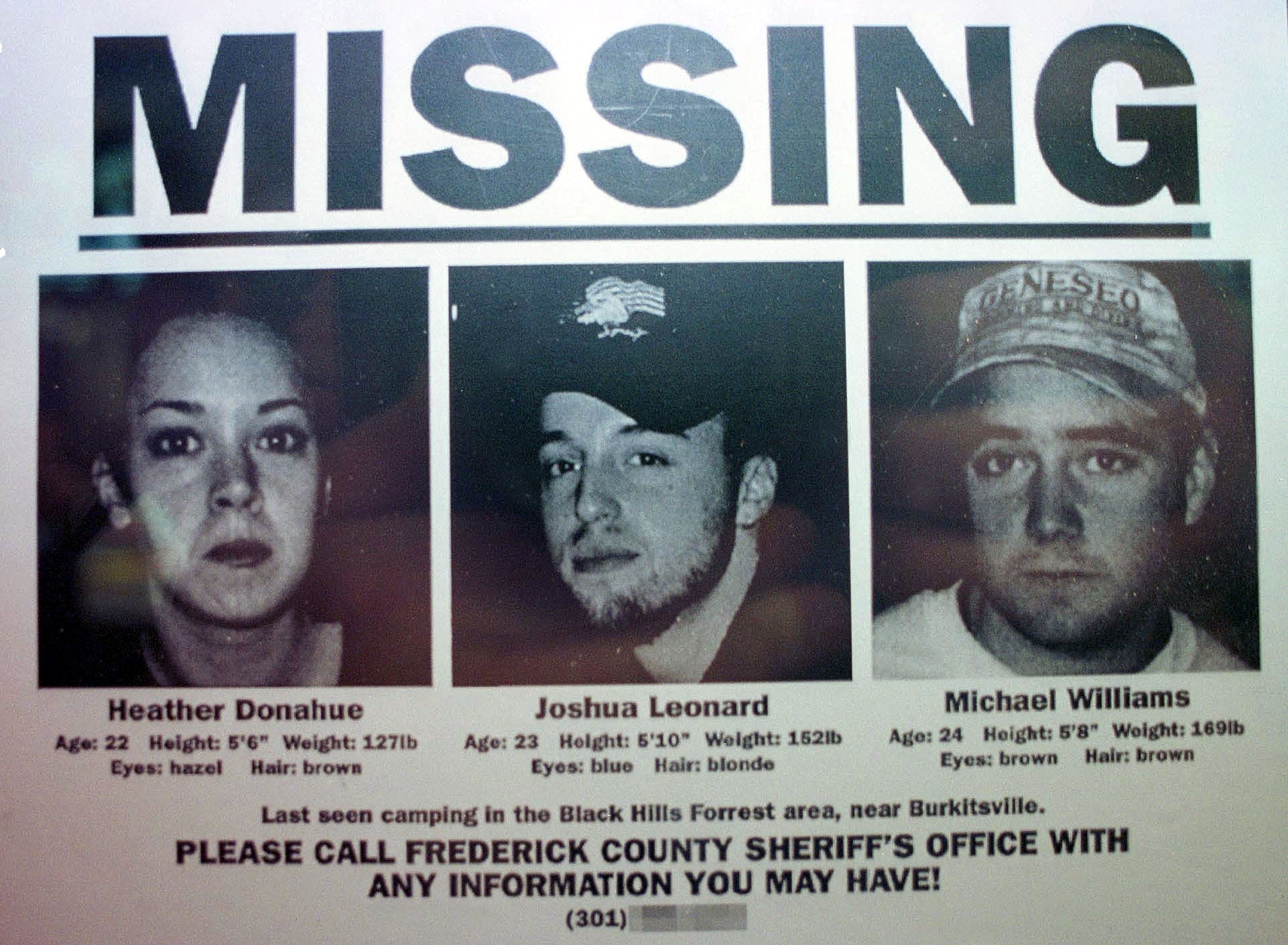
In 1999, three kids went missing while filming a documentary about the “Blair Witch” of Maryland. We now know these were actors, but The Blair Witch Project has since become legendary because of its viral marketing campaign.
Much like Cannibal Holocaust, The Blair Witch Project served as a vehicle to make found footage horror widespread. However, The Blair Witch Project proved itself differently, not creating a spectacle through intense gore, but rather creating a marketing campaign that would be made the blueprint for horror projects to come.
The internet was still new in the 90s. People were beginning to create personal blogs and find people through AOL chat rooms, and the concept of “social media” wasn’t even a thought yet. MySpace wouldn’t be available until 2003, and although Six Degrees was established in ‘97, the public didn’t exactly embrace its existence.
Still, the internet was a huge craze, especially for the younger generation. Gen X would be the first generation to experience its infancy, as they embraced the new age of technology and innovation, while also remaining skeptical about it (a great trademark of the generation). This is why the PR firm of The Blair Witch Project chose to run an expansive campaign through the internet.
A website was created for the movie detailing the “evidence” and testimonials of both the Blair Witch myth and the missing film students.
Considering the actors of the film weren’t well-known, it was easy for people to actually believe the story. And while the internet was a big part of this, The Blair Witch Project transcended into all types of media for its marketing. Missing posters were hung around college campuses and a “documentary” was released on SYFY prior to the film’s release. This was a marketing campaign unlike any other film, something that the public wasn’t accustomed to.
Thus, the film opened to an astonishing box office of 248 million USD on top of a $60,000 budget. The campaign succeed, and people were flocking to the theaters to see what happened to the three filmmakers.
The uncertainty of the film’s reality was still in the balance even after people watched it. The directors made the movie with no script, made the actors stay in the woods for eight days, and even made noises in the night to scare the three. So the movie felt real, because a lot of it was real.
People were fooled. That’s just what happened.
Of course, now with the film approaching its 25th anniversary, we know better. The movie simply had a cool marketing tactic, and the actors are alive and well (minus virtually getting no pay for their parts). But people were genuinely worried about the story at one time, being hit in the face with a new type of horror through an ARG.
The Rise of Social Media Horror
While The Blair Witch Project may have been the inspiration for many horror projects to come, the expansion of the internet helped in creating even more immersive concepts.
My mind immediately goes to the likes of YouTube, where series like The Marble Hornets and Ash Vlogs and I Know Where She Is gave audiences a new type of horror media. Instead of relying on found footage tropes within film, ARGs on YouTube advanced with the rise of technology.
YouTube ARGs typically played on the tropes of the site (vloggers, gameplays, amature filmmakers) and turned them into thrilling bitesize episodes for each installment of these series. But because these projects felt so realistic, many people would find themselves actually worrying for the creators.
Unless the series presented unrealistic scenarios, audiences were left in the dark about the reality of the situation. Ash Vlogs/IKWSI specifically plays into this, considering the vlogger character (Ash) is kidnapped and murdered, with her murderer toying with her fanbase as a sick joke. That’s something that seems plausible, so there were people who were scared for Ash (who’s an actress that was alive and well).
Away from YouTube, there were ARGs taking place on sites like Twitter. One of my personal favorites is Teletubbies Updates. That title seems unassuming, but the ARG involves a deranged man and his marital issues. Although the ARG starts innocently enough (providing Teletubbies updates, of course), it soon spirals into a dark and crazy tale of the owner of the Twitter account going mad, eventually ending in the murder of his family.
Now I find this one interesting because 1.) This account very obviously started as a joke, as meme accounts were very popular back then and 2.) I believe this spiraled into a horror comedy after the account garnered so much attention.
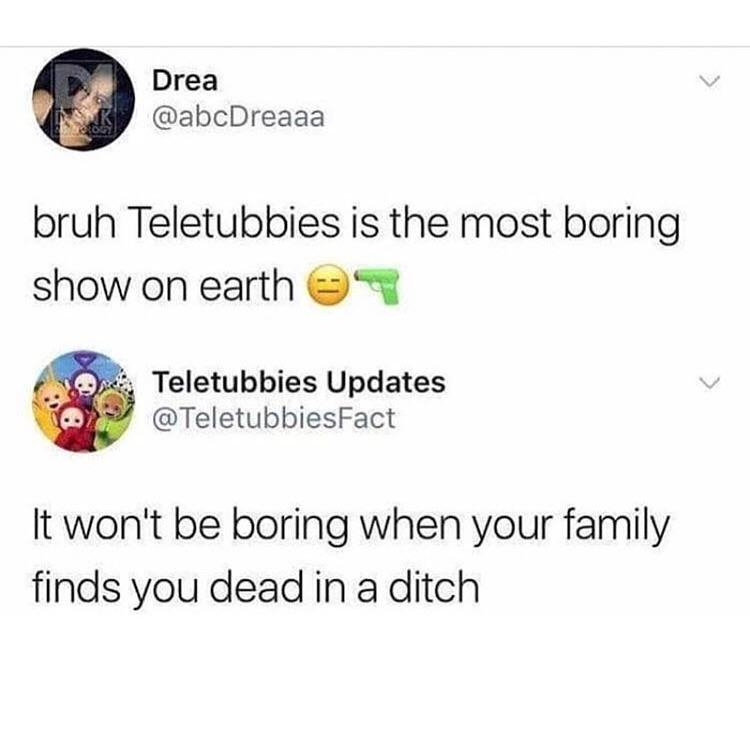
I don’t think it was ever meant to be a spooky story, but rather turned into one by accident. Still, I don’t believe the account was ever trying to be full on Stephen King with this thing, but rather just wanted to have fun with it while still keeping the humor.
Though the idea of a dude randomly snapping on his Teletubbies account isn’t the most far fetched thing ever (stan accounts are pretty wild). Some people were unaware of the fictional aspect, concerned that this dude was actually insane and a threat to society.
There was also Dear David, a viral scary story that took the internet by storm. People really thought a dude was being haunted by some kid, and to be fair, it was never really said to be a story until the creator had to come out and say so to calm people’s nerves.
Even outside of these things, I could remember being in elementary school with kids genuinely believing creepypastas were real. Children would be wary of Slenderman in the woods, and Sonic.EXE was a real game to us. Granted, children are more susceptible to those kinds of things, but the age of the internet with growing social media made it more difficult for people to discern fact from fiction.
We have to remember the old tongue-in-cheek saying: “If it’s on the internet, it must be true.”
When we take a step back and look at these different events, there’s some similarities we can pinpoint.
News outlets seemed to exaggerate aspects of the story and spread misinformation.
The spread of misinformation is dangerous and still a huge issue.
Media & digital literacy is an important skill to develop, considering it helps us with not only discerning fact from fiction, but also in our everyday communication and critical thinking.
In all of these cases, there were people who believed actual danger was happening. While, yes, a majority of people understood these were simply new ways to create fictional tales, there was still a small percentage of those who thought people actually died. I mean, a director literally went to court for murder charges on the basis of an article in a magazine. Plus, some folks would contact police to report the “danger” in some of these ARGs.
And while we could blame this on lack of critical thinking or something like that, we have to remember the era in which these events happened. These were all horror projects that were bringing new ideas and concepts to the table, therefore challenging norms.
Even those on social media were doing something unheard of at the time, as social media was typically seen as something more personal rather than the massive industry it is now.
There’s no denying that these all had an effect on what the genre has become in modern day. From ARGs to analog horror, the inspiration first came from these elusive projects that pre-dated even the internet.
I do think it’s interesting that social media now has a reputation for spreading misinformation, especially when we compare this to the history horror has had. News outlets still continue to share “fake news” and people still continue share it, even if they know it may be false. The only difference is now it’s all at the touch of our fingertips, and because of this, we are burdened with more responsibility when traversing through our timelines.
Sure, we don’t have scares like The Blair Witch Project anymore, but that’s only because we have things like IMDb, websites that tell us everything about a movie down to the location of the set. There’s no mystery, so there’s no confusion of what’s real or what’s not.
But the magic of The Blair Witch Project is still alive in certain social media horror projects at least, even if they can be rare to find. Just take a look at some of the most popular TikTok horror stories, with people in the comments asking “is this real?”
Still though, I think the importance of understanding why media and digital literacy is so vital in our digital age needs to be front and center. When people are spreading misinformation and even making people think fictional horror is real in 2024, I think we need to pause and reevaluate.
But hey, at least we got a horror story about a deranged Teletubbies fan out of it.
"Blair Witch" has to be one of the most financially successful movies ever made, considering the disparity between the budget and the theatrical gross.