

Fear Through the Generations
Horror throughout the decades and why it adapts to the times

I’ve always been able to watch horror films with my father. We connect mostly through fiction, giving our opinions on the newest film we watched and exchanging criticism or praise depending on our thoughts. My dad has always been a cinephile, even before I was born, and is the creative one out of my parents. If you walk into their coat closet, you’ll see hundreds of old DVDs, movies from every genre. It’s like walking into a personal Blockbuster—the only thing it’s missing is the popcorn and candy.
My dad is the one who has around a dozen concepts for stories that he’s never written. He’s written poems, given detailed world-building, and has filled up journals full of ideas. One could say I inherited my creativity from him, considering I also have a catalogue of characters, stories, and whatever else have you. I guess I’ve always been able to connect with my dad on the core concept of being a creative, and I’ve never taken the support my parents give me on that for granted. I’m lucky to have parents who always support my ambitions of creative endeavors, no matter the situation.
Not everybody is as lucky. It always breaks my heart to remember that.
During our bonding time, my father and I typically find ourselves discussing films mostly from the horror and superhero genres. I’ll admit, the superhero discussions have become more negative in recent years due to the oversaturation and staleness of the genre, but our horror discussions have remained lively. While I enjoy talking about modern films like Get Out and Smile with him, I find myself enjoying our conversations about horror films of the 80s and 90s the most.

Mostly, I enjoy hearing my father’s stories of when he first watched the movies back in his youth, when he was closer to my age and finding a love of the very same thing I do. It’s strange, really, in realizing the part horror has taken in my family. Multigenerational, in fact, starting with my great grandfather being the driver that drove around the crew of The Creature of the Black Lagoon on a Greyhound bus.
My father’s stories always start with him saying how old he was, what year of school he was in, if it was before or after he met my mother. He always tells me that as a teenager, he watched slasher films for the gore and pretty girls. Now, as an adult who’s gone through a helluva lot, he appreciates the films for the stories they tell.
I recently asked my father if there was ever a horror film that scared him when he was a teenager. Finally, he said, “Hellraiser. That was a creepy movie, and I was a senior in high school when it came out. We saw the midnight showing.”
That peaked my interest. Hellraiser is a creepy movie, and as a child I had nightmares of Pinhead. Yet now I look at the film in a more appreciative light, admiring the eerily beautiful character design of the cenobites rather than focusing on the aspects that once scared me as a child.
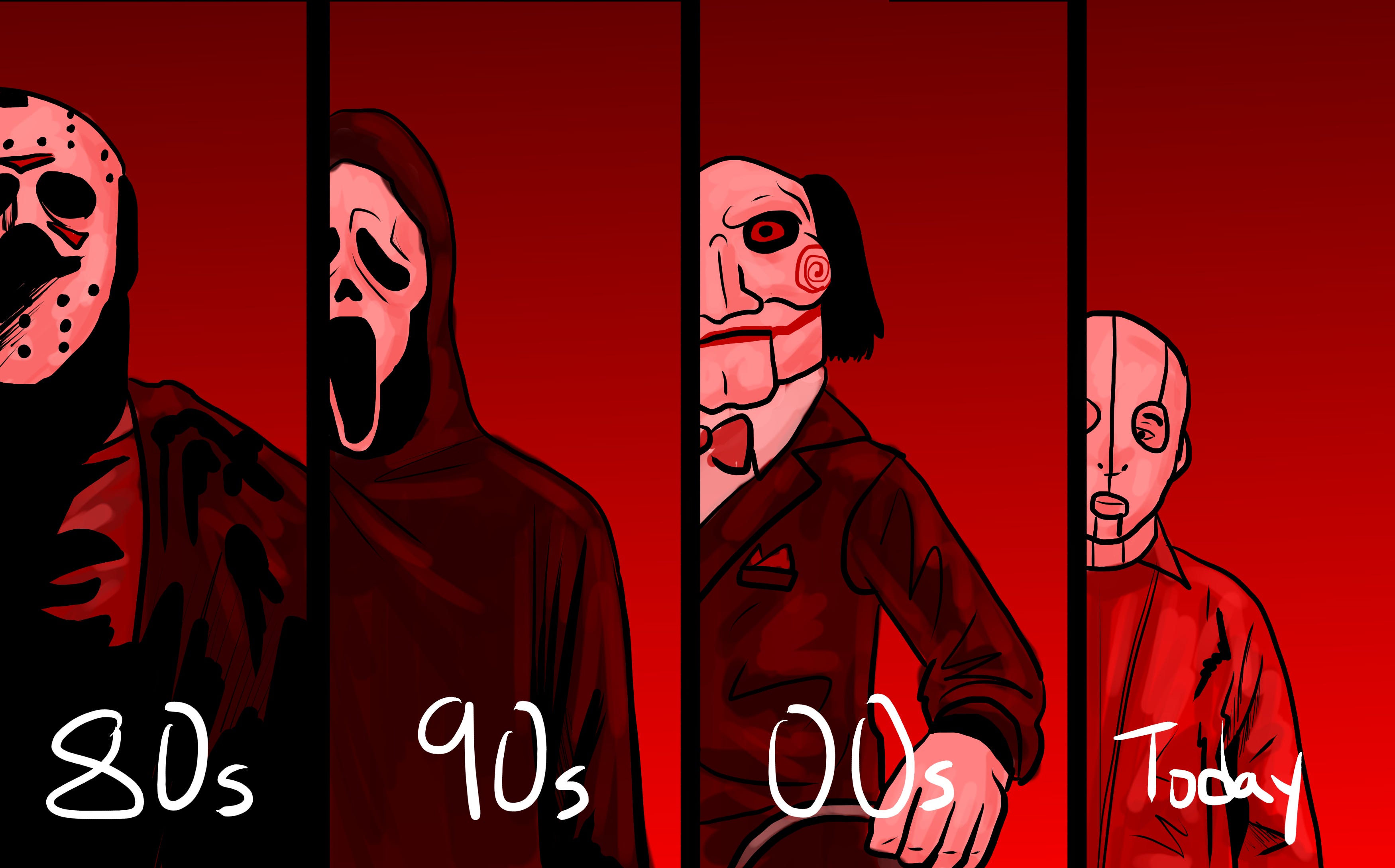
When thinking on it, and I mean really thinking on it, it’s quite fascinating to see how horror films have changed throughout the decades. From The Exorcist in the 70s to A Nightmare on Elm Street in the 80s, from Scream in the 90s to The Ring in the 2000s. These were all very different in concept, yet they also all reflected their respective decade.
It makes me think back on a Halloween where I was dressed as Michael Myers. A little boy pointed at me, smiled, and yelled for his mother that Michael was there. He didn’t seem scared, in fact he seemed excited. His mother, however, actually ran off in fear of me. It’s silly, sure, but that in itself shows the significant difference that a generational gap may pose in the effectiveness of horror.
The Horror of the 80s
Gen X grew up with the Golden Age of Horror, the silver screen promoting slashers as the next wave of icons. 1. I’m jealous. 2. Each of these slashers represented their own motivation, rather that be the state of “pure evil” or revenge.
At the same time, America was promoting a multitude of things: patriotism, materialism, and the good fight against evil during the Cold War.
(By the way, this is a very American based POV of the topic, and not at all representative of horror that was happening in other parts of the world.)
The 80s was the time of yuppies and hairbands, but it was also a time of great fear. If it wasn’t the Cold War, it was the tragic AIDS epidemic, and if it wasn’t the AIDS epidemic, it was the looming issue of the War on Drugs. That’s not even mentioning the Challenger crash, Black Monday, or the attempted assassination of Ronald Reagan.
While all of this was happening, Gen X flocked to the movies to see slashers senselessly kill teenagers. It was a sense of escape, but these films also touched on the current issues that people were facing during the time.
In particular, A Nightmare on Elm Street: Dream Warriors gave us a cast of characters that represented all types of problems the youth faced. A girl with drug addiction, a boy with anger management, a girl who wished to be famous and successful, a boy who survived a suicide attempt, a sleepwalker suffering from night terrors, and a young boy who suffered from extreme trauma.
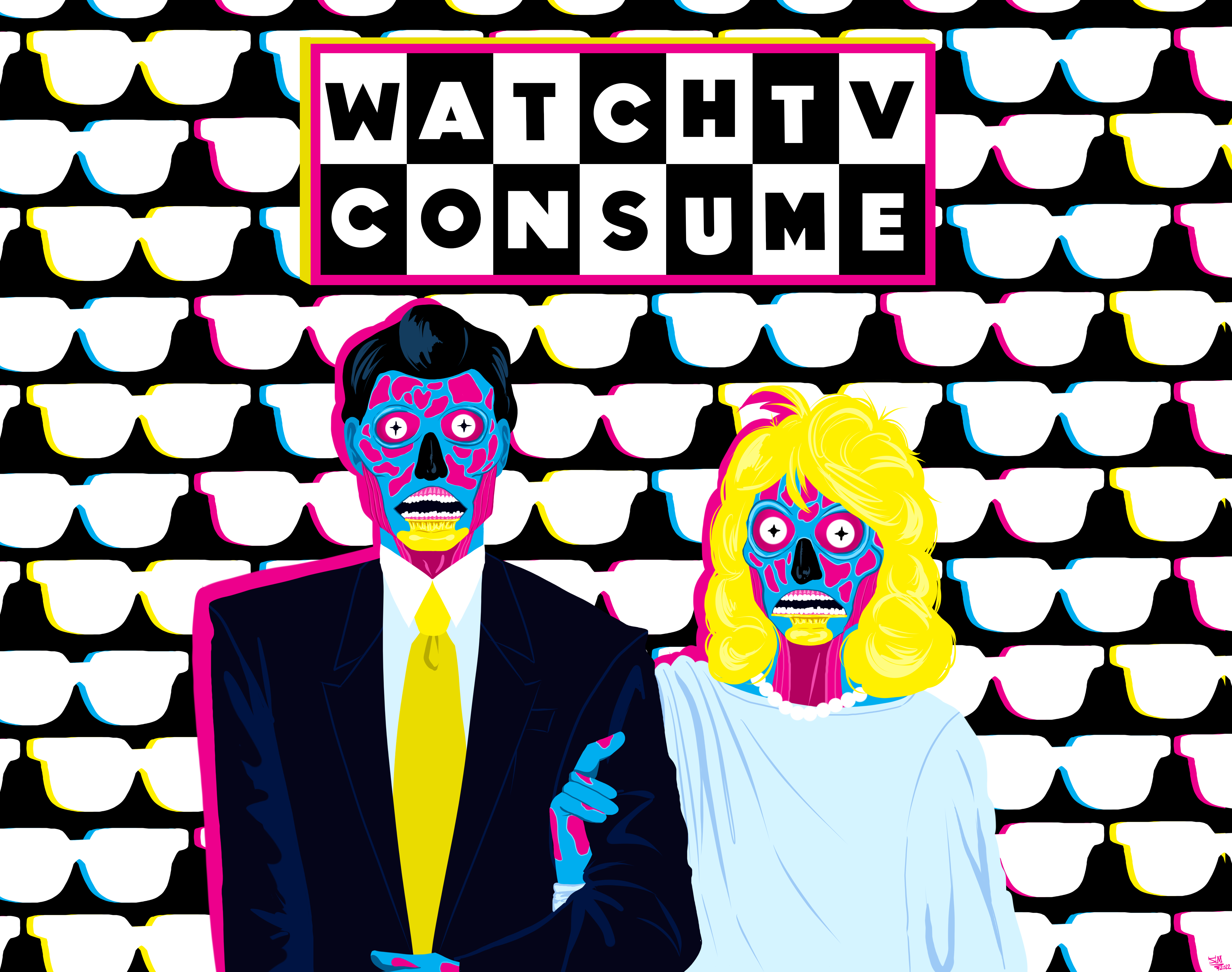
Outside of slashers were films like They Live, which touched on the materialism and greed that America faced. The world is ran by aliens that control the narrative, and unless you open your eyes, you would stay asleep to what was really happening. Essentially, you were to be awake (or “woke” in modern slang).
Other films also blended comedy and horror together to distract from the real life horror of the world, with movies like The Evil Dead, An American Werewolf in London, and The Lost Boys. While all of these were vastly different from each other, they all served the main purpose of escapism for the youth.
The Horror of the 90s
When the 90s came, horror became much more “smart.” The youth knew all the tropes of the classic 80s films, which prompted the creation of Scream. People were tired of the typical slasher, no longer scared of the silent stalkers from the Decade of Greed.
It wasn’t only that though, the 90s box office was filled with movies like Jurassic Park, Fight Club, and The Matrix. People liked to think about their films and have conversations about them afterwards. So… a masked dude was the solution.
Arguably, Ghostface is the face of 90s horror, as the character was everywhere after the release of the film. His character transformed the silent slasher into something more realistic. Ghostface was human, tripping and getting caught on doors. He was also clever, being inspired by the classic films of the 80s and using these tropes as ways to get his kills. And then, there was the twist of Ghostface being two killers at the end—now that’s different!
And we can’t mention 90s horror without Silence of the Lambs, a film that won the Big 5 at the Oscars because of its brilliant storyline, but also the only horror film to ever receive the honor. Anthony Hopkins as Hannibal Lecter will forever be freaky as hell, in the best way possible.
Along with these came other films that differed themselves from the 80s slashers: The Sixth Sense, Misery, Candyman, and—probably the most influential—The Blair Witch Project. The Blair Witch Project made headlines, being one of the first horror films to use an extensive marketing campaign online and one of the first to focus on a documentary-like style. And, just like its predecessor Cannibal Holocaust, it faced crowds of people unsure of if the film was actually real or not. Pretty damn good movie making there.
The Horror of the 2000s
(Come on, it’s basically every 2000s trope in one movie!)
So now we hit the 2000s. This decade of horror was hit-or-miss at times, but the decade was rather interesting in terms of what it had to offer. The slashers and extreme gore made a come back, though this time offering more complex stories.
American Psycho played on the slasher trope by bringing in criticism of culture of the 80s, focusing on yuppie greed and materialism as murder took place in the background. On the other hand was Jennifer’s Body, criticizing societal pressures young girls and women went through, especially during a time where the media heavily victimized young women like Britney Spears.
Saw and Hostel gave us the “torture porn” genre, taking the innate fear of being kidnapped to another level. In addition, there was the Final Destination franchise, which focused on the horror of realistic accidents. While there were certainly creative deaths, many of these films started with something as simple as a plane crash or a roller coaster accident.
One of the most popular from this decade, too, was the famous Paranormal Activity. Yes, the paranormal horror genre survived throughout every decade (i.e. Poltergeist) but Paranormal Activity was possibly one of the first to take the world by storm. It was filmed in a documentary style like The Blair Witch Project, though this time showcasing the everyday lives of a couple in their new house. Audience grew a bond with what felt like real people, so when the paranormal horror began in the film, it was scarier than ever.
The Horror of Modern Day
And modern films? Modern horror also represents modern times. The Purge, for instance, shows an America that allows all crime to be legal in order to keep down the crime rate, unemployment, and the population. It shows America’s weird fascination of violence, but also how the government doesn’t care about making a real solution. Rather, the government would let thousands of innocents be murdered instead of solving their issues.
Meanwhile, Us represents the class divide in America, with the oppressed living underground while the privileged get to live their life to the fullest.
There was also Skinamarink, an analog horror film that, as many people believe, focuses on the trauma of childhood. It highlights primal fears, such as unfamiliarity, liminal spaces, and uncertainty in life.
Closing Thoughts
Essentially—
The horror films of the 80s began to highlight the issues the youth faced, considering that was their prime demographic. While it highlighted these issues, the genre also served as a form of escapism for the teens and young adults at the time.
The horror of the 90s distanced itself from the 80s, as the youth of the 90s needed something different from the tired slasher. They wanted something smart and more realistic, as the youth of this decade were growing more interested in current events and politics.
The horror of the 2000s was a result of people craving something raw. The youth wanted the be genuinely scared, and that was possible through more intense horror. The youth and America in general were already terrified after the events of 9/11, and horror films reflected this.
Modern horror films continue to focus on the very real issues present in America. Class division, government corruption, and about everything else you can think of, including more personal topics like mental health and trauma.
At the end of the day, there’s some horror films that are timeless, being able to scare just about every generation. For me, I think of films like The Thing, which focuses on the fear of isolation and the unknown, something which most people have unease about. But… I don’t think that means other horror films that aren’t “timeless” don’t deserve their praise.
I love slashers and 80s horror films. They don’t always strike fear in me, but their concepts do. Freddy Krueger as a concept is scary, just as a guy in a mask stalking you with a knife is. These films act as wonderful time capsules of their time, showcasing what each generation not only feared, but worried about endlessly. These films gave us historical perspectives on important events, mental health, self expression, and the troubles that the youth faced.
In the 2020s, the youth still flock to horror for the want to be heard. These films seem to take everything we’re concerned with and amplify it, giving us a much needed voice in a world of static.
My first thoughts come to films like Pearl, focusing on a woman who very obviously suffers from an undiagnosed mental health problem. Pearl also has to deal with the effects of WWI and the influenza epidemic, with her husband fighting in the war. Meanwhile, she’s forced to help her German immigrant parents. She has to deal with generational trauma, being a first-generation American, and her inner self.
Most importantly, Pearl wants to be famous. She wants to be recognized for her talents, to be swept away from her small town, and to live a big life.
There was a reason why so many young people flocked to this movie. Older Gen Z faces outrageous problems with the job market, increasing prices due to corporate greed, and virtually no affordable housing. Young people want to be successful, but cannot go forward due to issues out of their control, similarly to Pearl.
However, Pearl showcases a woman’s mind broken beyond saving, to the point she resorts to multiple homicides. The things you can’t control will eventually weigh on you if you let them, and the film shows the audience what happens when you allow everything to crumble around you.
I’m uncertain of what the next decade of horror will bring. What will scare Gen Alpha, the generation born into a digital age and who faced significant historical events? Only time will tell, but I feel as if the genre will have to get a whole lot more creative.
In the meantime, we can reflect on the current and past films of horror and dissect what made them scary for each generation and why.
Your father sounds like a wise man and, if my calculations are right, probably about the same age as me 😁
When Hellraiser came out in 1987, Clive Barker having also written the Books of Blood a couple of years before, really was the future of horror, as Stephen King had called him. Unfortunately, his experiences on Nightbreed, his follow up movie to Hellraiser, where the studio trashed his cut, put him off Hollywood for good really, but Hellraiser stands the test of time as one of the true great horror movies
The bridge between the 80’s with Nightmare on Elm Street and Scream in the 90’s was, of course, the director Wes Craven. He had tried the meta thing with New Nightmare a few years before but Scream really got everyone’s attention. He was just trying to show what horror movies had become whilst also making a really scary movie. That’s why none of the spoofs worked cause it was already a spoof!
Horror in the 2000’s has been very hit or miss for me but the last few years have definitely seen an upturn in quality so here’s hoping it continues
Apologies for the long reply and thanks for a great article 👍🏼