

Idols Are Not Here to Help You
On idolatry, superheroes, and megastars

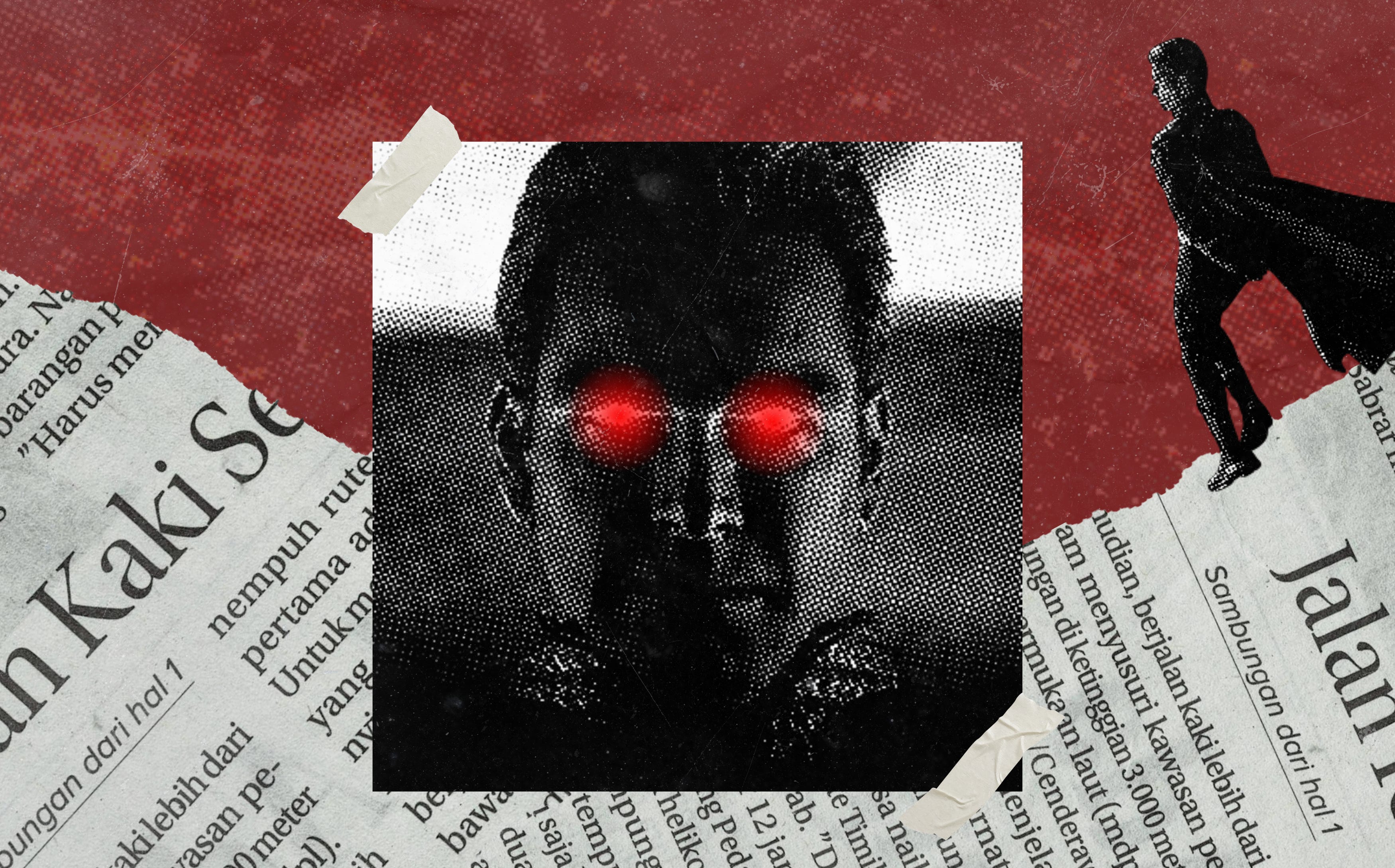
“Nobody is coming to save you.”
A phrase that The Archive has studied immensely. On the surface, it feels like a simple piece of advice. Nobody is coming to save you, so you must save yourself.
In a way, it is meant to remind you that you are in charge of your life. That you are the hero of your own story.
And yet, under a microscope, this statement becomes much more sinister. If nobody is coming to save you, then who are the men and women who claim to be our saviors?
The Archive is not referring to police officers, firefighters, or even medical professionals. Rather, we are pointing to the actors behind podiums that cosplay as politicians and governmental figureheads.
That is not to say that every politician is fake, but rather that many of them ride on the false promises of a better future they never intend on creating. In their faux grandeur, they hoist themselves up as heroes while taking bribes from corporations under the table. These suits are the “saving grace” of a nation that suffers from the tight grasp of division, insecurity, and economic downfall.
In comic books, people can usually look up to their local superhero for comfort. While governments fail their people, superheroes become the stand in for the peace they wish for. Superman is the symbol of hope, Captain America is the symbol of freedom, and Wonder Woman is the symbol of strength.
That is where The Archive must then consider our world’s counterpart: Is the celebrity treated as the equivalent of the superhero?
In some ways—yes. Celebrities are put on pedestals, with flashes of cameras following them everywhere they go. Despite the internet’s attempts at telling us that celebrity worship is dead, it’s hard to ignore the constant flood of parasocial relationships between fans and celebrities that continue.
The modern celebrity is idolized, whether people want to admit it or not.
But one has to solve the equation: society suffering + faux heroes + pressurized mega stardom = ?

PART I: To Create a Hero
In 1950, Vought-American was created as a pharmaceutical manufacturer.
The company was known for the creation of Compound V, a serum that originated from the Nazis’ infamous human experimentation, that gave its users superhuman abilities. In fact, the founder of Vought was a Nazi himself, and only created Compound V to create a “superior” race.
In modern day, the company has long distanced itself from its history. It is not a company known for its horrific past but rather for its iconic superheroes. Heroes that save the day just like in the comics.
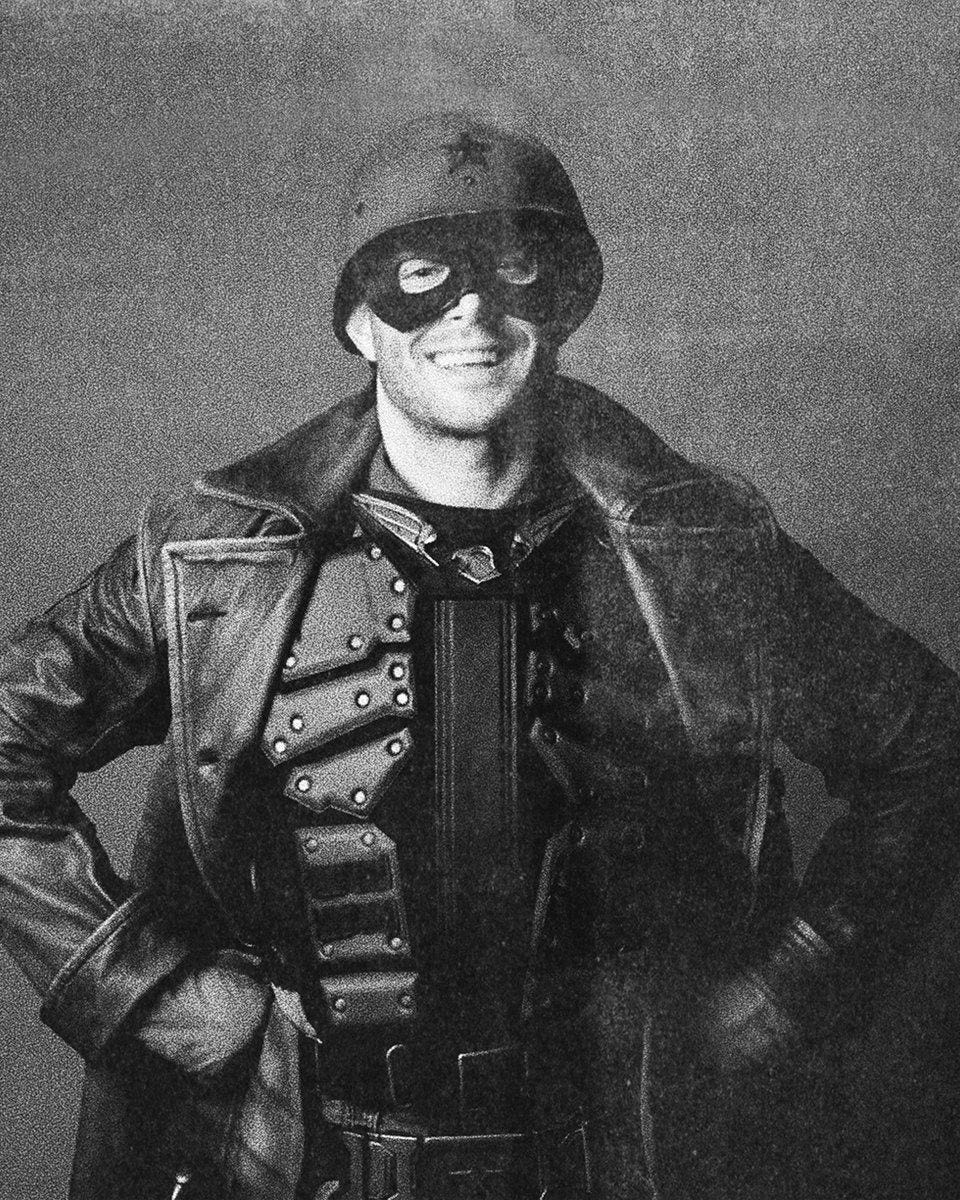
At first, it was Soldier Boy—the hero that represented every American ideal. A symbol of heroism, patriotism, and freedom.
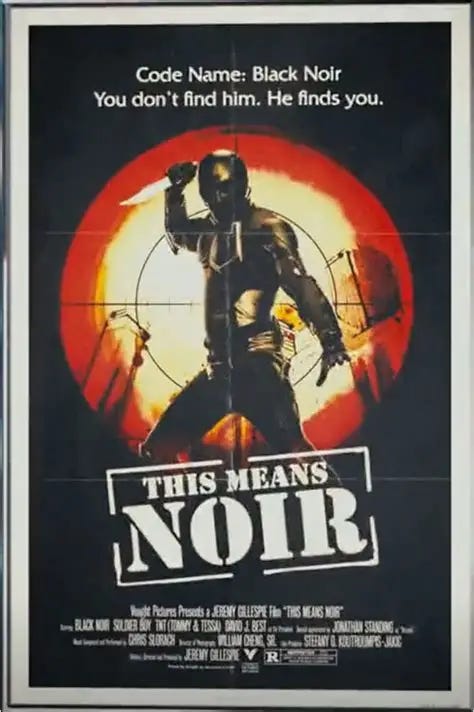
Then, it was Black Noir. He acted as a more mysterious being, with his mask allowing anybody to see themselves as a hero. He was a ninja in disguise, fast and resilient in his motives of selflessness.
Finally, Vought brought out their most anticipated member at just the ripe age of 18-years-old: Homelander. The “All-American” boy scout that was just like anybody else despite his immense power.
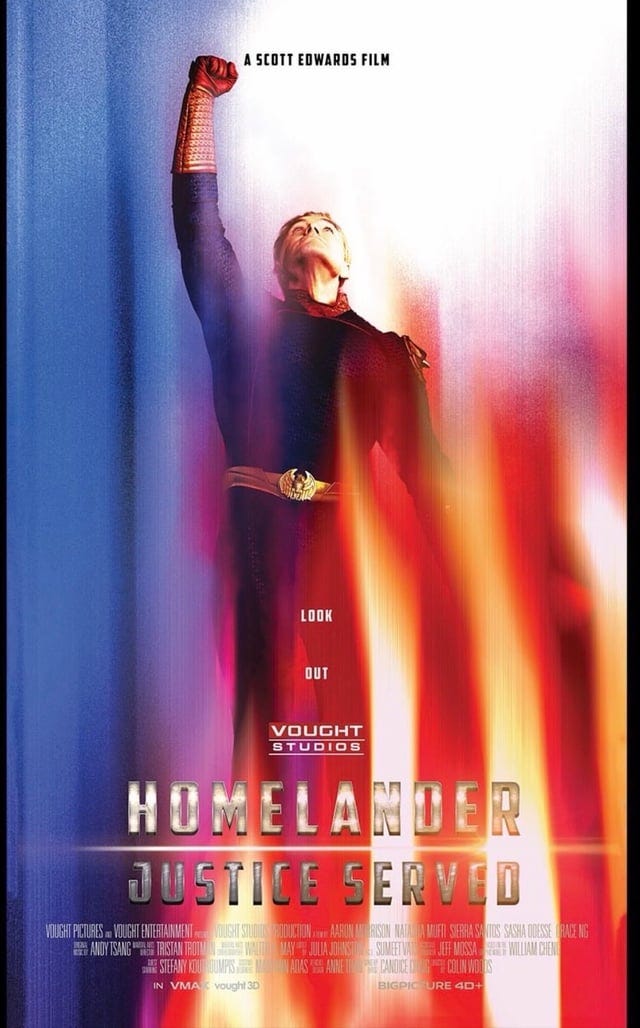
From the beginning, he was treated as the face of the company.
He was deemed as “The World’s Greatest Hero,” caped in the colors of America and continuing the Manifest Destiny through superheroism.
And that’s exactly what the people wanted.
Vought is not just a company that creates heroes, after all. They create megastars. They are, in the simplest terms, an elitist talent agency exclusively for superhumans. Vought knows how the human brain works—they know exactly what sells.
Young talent is always seen as exciting. LeAnne Rimes at 13-years-old, Justin Bieber at 13-years-old, and who could forget the incredible Michael Jackson at just 6-years-old singing for Jackson 5.
In this case, it wasn’t just the fresh face that brought in people, but rather the power.
With Homelander came the power of flight, super strength, and laser eyes. This was on the scale of something the world had never seen before. He was the strongest and therefore deemed the biggest protector.
People didn’t just look up to Homelander—they believed in him.
They praised his good deeds, begged for his autograph, and prayed for him whenever a crisis ensued. He was their best friend and their hero. If something went wrong, it was obvious whose name you called out for.
Vought delivered a product to a solution everybody needed: a savior to their own problems.
PART II: Who Were You Before?
People want to look up to those they can relate to.
Vought manufactured the entirety of Homelander. His story told of a boy playing baseball with his dad, enjoying apple pie during picnics, and watching cartoons every Saturday. He was marketed as the everyday man, because without that story, he would be unapproachable simply because of his sheer power.
People cannot admire what they cannot understand. They can, however, see themselves in someone who was brought up very similar to them.
Homelander was never meant to stand out in backstory. That was the point.
But The Archive wouldn’t be talking about this if that was all there was to this story.
Rather, The Archive has connections which has passed over classified Vought files. Homelander wasn’t an average child but rather raised in a lab like a test subject. In fact, he was an experiment, with scientists testing his powers and durability through ways of torture.
From birth, he was kept in a lab. He was studied, observed, and tested. He was treated as a product test rather than a person, forced into inhumane experimenting by adults with little morale. Despite Vought’s public distaste of their history, their Nazi roots seemed to have stayed strong in their treatment of science.
AUDIO LOG 033
JULY 8TH, 1989
[REDACTED]: We’ve found a name for you, John. Would you like to hear it?
John: I guess.
[REDACTED]: We’re naming you Homelander. You love America, so we want you to be named after it.
John: … I do?
[REDACTED]: Yes. You know that.
John: … I do.
Because of this, Homelander was groomed into an identity he never had. He doesn’t identify with the humanity that Vought placed onto him because he was never allowed to have it.
Just like any other young star, he was brought into something bigger than himself.
When we look back at history, we see celebrities act reckless and disobedient. Typically, they are the ones who were only children when they were first brought into the limelight.
Agencies plaster images on celebrities that aren’t always reflective of true personalities. People are forced to constantly be on high alert, smile and put on an act, or their fans will strike like a snake.
There is no concept of true identity when you are acting your entire life.
In Homelander’s case, his identity was exactly what Vought told him he was: The World’s Greatest Superhero. Not a person. Not a human. Not even a man.
Vought never wanted that. They refused to give him a real identity.
He was objectively synonymous with power.
He was power.
And so, he was.
PART III: Product Failure
Keeping a lion in a cage is a dangerous act.
The Archive isn’t shocked by the intensity of praise Homelander received. We are, however, shocked by how easy it is to trick an idol into confusing attention with affection.
Worship is not the same as love.
Love is unconditional. Worship, in some regards, is completely conditional. You must offer something for the people to believe you are worthy of worship.
You don’t need to be anything for people to love you.
And so, is it actually surprising when those in the spotlight begin to bend the prison bars?
And what does that do to someone who was never given the choice between ordinary or extraordinary?
Do they stay inside? Do they continue to obey the rules?
Or do they, the most powerful hero on Earth, defy their very own creators?
How does the psyche react when they are told time and time again how special they are and how much people love them, only to then be told that their entire identity is a lie.
That they are a failure.
A product gone rogue. Feared and not loved.
INTERVIEW - DATE UNKNOWN
Interviewer: The people want to know what you do in your free time.
Homelander: I… like baseball.
Interviewer: Oh, is that it? I mean, what do you do when the cameras aren’t rolling. [she laughs] Dance? Sing?
Homelander: [He laughs] Well, I wouldn’t know. The cameras are always on me. I’m the face of The Seven, remember?
Interviewer: Well, yeah… but seriously, do you have any hobbies?
Homelander: … I’m not sure I understand the question.
A weak and irredeemable villain.
When we see the headlines of child stars being shamed for their addictions and mental health, we brush it off as nothing special. It is simply another star that burnt out in the vastness of space.
It is not that we don’t care, but that we fail to remember their humanity. Media told us they are entertainers. That they are someone to gawk at. They are untouchable, an idol we look up to rather than a peer we see eye-to-eye.
It is not a new phenomenon, but rather a quirk that humans cling to. Despite how much we are told that we must save ourselves, we are always looking for something else to give us the answers. And when we cannot find that through introspection or by simply being present, we begin searching for the next best thing.
And sometimes, that comes in the form of a person providing us perspective. Sometimes it is through art, other times it is through connection.
Oftentimes that connection is formed with an artificial identity, manufactured for the cameras and engineered to make you feel seen.
FAN MAIL 10038
RECOVERED FROM VOUGHT ARCHIVES
Dear Homelander,
My name is Harry. I’m seven, but when I grow up I want to be a hero just like you!
I’ve seen all your movies. And sometimes I pretend I can fly.
I hope I can meet you one day. My dad said he’s going to take me to Voughtland soon!
From,
Harry M.
That brings us back to Vought.
They are the creators of superheroes. They are the creators of make-believe identities.
Vought is not the reason for false idols. They just simply capitalized on it.
They are responsible for the ticking time bomb they created. The child they groomed into a hero. The product they told was a god—and then snatched the title back.
But before this file goes further, The Archive must tell our readers this: there is no good in this story. There is simply tragedy and horror.
The Archive recovered countless files from Vought, but none of them contained the word “child.”
Homelander is a victim of Vought’s machine. Another tragedy from corporate marketing to make a quick buck. But he is not the good guy.
The people who worshipped Homelander did so out of insecurity. They feared their own problems and clung onto something more powerful than them, something that felt much more stable. At the same time, they funded the very thing that keeps them in such instability. They are victims, but they are not the good guys.
So, then, it is no surprise about the disaster that took place on [REDACTED].
PART IV: Scorched Earth
CASE FILE: 0501
STATUS: CLOSED
TYPE: DISASTER
On [REDACTED], Vought lost control of its most valuable asset.
Witnesses who worked at Vought described the incident as shocking and unexpected.
Only 10 employees survived.
At approximately 9:37 AM, Vought Tower collapsed. It was described as being cut in half, falling into the busy streets and causing mass destruction.
Witness testimony described seeing employees attempting to escape the destructed building, only for what looked to be red lighting strikes hunting them down. Debris, smog, and blood filled the streets of the city.
By 12:01 PM, the city was in complete chaos. For once, people were not calling Homelander for help.
Instead, they were begging for mercy.
Military helicopter personnel described the scene with one phrase: scorched earth.
It wasn’t until [REDACTED] that the threat was contained.
The Archive does not have enough details on how Homelander was killed, but we do know [REDACTED].
The aftermath was devastating. Despite the loss of headquarters, Vought continued operations with minimal interruption. Internal communications referred to the incident as a setback rather than a catastrophe.
Joint efforts from FBI and Department of Homeland Security were deployed following the incident. They were instructed to investigate Vought to find out:
A.) Why this disaster happened
B.) How to prevent it from happening again
Their investigation found a few surviving items, including but not limited to:
Documents indicating Soldier Boy was still alive, despite his attack on Vought Tower prior
Artwork by Black Noir featuring cartoon creatures, indicating that Soldier Boy was possibly responsible for his brain injury
Files that were locked away about the status of Homelander’s upbringing, including Vought’s extensive human experimentation on him as a child
Evidence suggested that Vought knew Homelander could possibly go rogue. In fact, internal communication indicated that Black Noir was tasked with keeping Homelander at bay, and to kill him if anything ever went wrong. Investigations are still ongoing about why Black Noir didn’t follow through with his orders.
At the end of this all, The Archive can only question why the proper authorities ever allowed Vought to have this much power in the first place… until we remember the significance that WWII played in the company’s history.
Still, it is quite obvious to anybody that this incident wasn’t just a fluke—it was meant to happen.
It was, in the most tragic sense, inevitable.
Vought underestimated the one thing they never gave Homelander: his humanity.
Despite how powerful and “godly” he may have been, the lack of compassion is what ultimately caused his demise. Raising a boy as an idol is reckless.
No matter how much they wanted to deny the human left inside of him, it was exactly that little boy that caused the mass destruction.
Scorched earth does not come from a lack of parents. It comes from a person being denied their own humanity.
Scorched earth is caused by the carelessness of the corporation. Scorched earth is caused by the human being treated as a god. Scorched earth is caused by the people worshipping a false idol.
Conclusion
Idols will be here for as long as humanity is.
That is fact. One that The Archive cannot change.
Yet, we see how idols are treated time and time again. How fans become obsessed with the idea of them. How companies earn millions off somebody else’s work. How the person beneath the idolatry loses themself.
The question isn’t why corporations keep inventing idols. The question is why we keep begging for them.
Archive personnel remain divided on Homelander’s fate.
While some argue that his death was inevitable, others have proposed a crueler punishment: normality.
Discussions only led to The Observer transmitting the following message to our staff:
“There is no punishment in death. Death is peace. But to live without true identity—to never know who existed before the cape—that is a punishment much harsher than any prison cell.”
Supplemental Material
The following reconstruction is not primary evidence, but The Archive believes it accurately captures the horror of the Homelander incident. Credit to Franco P.
If you believe in The Archive’s work, you can support further investigations here.