

Longlegs and Its Complicated Mother/Daughter Relationship
Over protection, resentment, and the fear of letting go

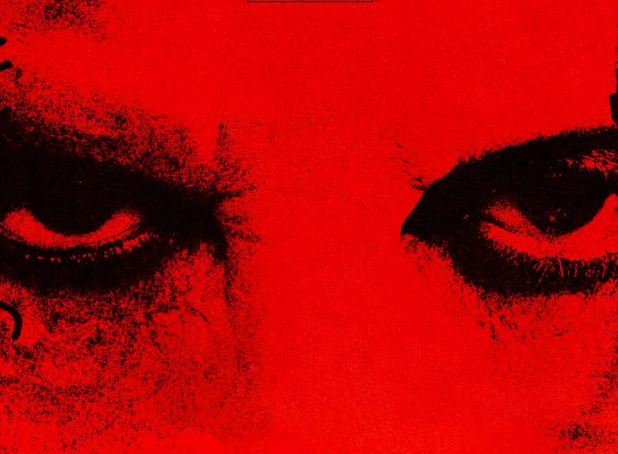
Longlegs presented itself as a high-stakes crime horror, and with Nicholas Cage playing the role of the serial killer, it definitely piqued the interest of many. When I watched it for the first time, it was after the many rave reviews of the film being labelled as “a nightmare fest,” so I had high hopes going in. Plus, I was definitely curious to see how Nick Cage would approach the role.
Of course, the film was quite good. I definitely understood the hype around it, as it took a fresh new approach to the crime horror genre. What’s more, the film did more than just tackle the job of a FBI agent trying to solve a case; it tackled the underlying trauma associated with being overly sheltered by your parents.
Lee Harker, the FBI agent in question, is taken on an emotionally charged ride of twists and turns, with her story intertwining into the killer’s.

Context, Context, Context… (Oh, and spoilers)
The first time we learn that Lee may be connected to the serial killer of the film (whom is named Longlegs), is when her home is broken into by the murderer. While he doesn’t do anything to harm her, he does leave a very interesting note on a birthday card, one that he warns her not to open until the 14th.
The break in, which interrupted a call to her mother, leaves Lee concerned for her safety. However, she disobeys the letter of Longlegs, and instead opens the card and dissects the encrypted message through the Bible. As the film continues, we learn that these messages are encrypted this way due to Longlegs’ dedication to Satan, with his killings serving as what one would assume to be sacrifices.
Later, we find out that Longlegs kills the families on either 6 days before or after their child’s birthday, which all happen to be on the 14th of the month. Putting this together, the dates form an occult symbol, yet one date remains missing.
Although this is all great evidence, the FBI are still trying to find who the actual murderer is. At one point, they come across a doll hidden at a previous murder scene, and inside the doll’s head, they find a strange metal ball with unusual energy. There’s nothing much they can do with this information, so the search continues on, at least until Lee’s supervisor questions her past.
See, Lee’s mother filed a police report about an intruder on Lee’s birthday… which is on the 14th. With Lee not being able to recall such a memory, she visits her mother in hopes that she can gain some information.
Her mother isn’t much help, but she goes into her childhood room and takes home her toy chest, in which she finds an old polaroid of the man who visited her. Because of this, Longlegs is arrested and taken into questioning. Now, this is where things tie back into my thesis.
Longlegs tells Lee that he serves the devil, and that Ruth (Lee’s mother) helped him in his endeavors. This in itself seems like a shocking revelation, but it isn’t until he says “Hail Satan” and beats himself to death with the table that the film really crawls under your skin.
Anyway, we learn that Ruth begged for Longlegs to spare Lee’s life, and in return she had to help him kill families by delivering the dolls (and their metal orbs). But how does this all connect?
Ruth Serves a Helicopter Parent (Sort of)
While Longlegs himself is quite the freaky character, Ruth is also one that leaves you with future nightmares.
Her story invokes the classic tale of parents who over protect their young, sheltering them from the world outside. Of course, Ruth was left with no choice in the matter, willing to do anything to protect Lee, including murder. However, this is a movie, so symbolism is typically drowned in exaggeration. After all, the wonderfully crafted storylines are what makes films fun!
Plus, I like finding messages and symbolism in things like an English teacher desperately grasping for their class’s attention.
Lee’s meeting with Longlegs was proven to be one of trauma. A trauma that was blocked off from her grasp for years, as the satanic doll that was created for Lee served to block out any memory of the event. In turn, this serves as the “over protection” of the story, keeping Lee from the truth of her past.
Eventually, the connection between the doll and Lee is broken, and Lee regains all of the emotions and trauma associated with Longlegs. The memories, the fear, the uncertainty… everything comes back to her. With this new found trauma comes a resentment toward her mother, a confusing resentment, but one nonetheless.
By the end of the film, Lee is forced to kill her mother to save one of the last victims of Longlegs. Although she doesn’t hesitate to shoot her dead, the aftershock of the event leaves Lee in tears. An emotional turmoil, one could say, built in Lee’s soul.
The issue presents itself quite clearly: Lee loved her mother, even if Ruth did awful things.
Ruth did everything in her power to protect her daughter. She did what she believed was best for her child, very similar to what real parents who perform the sheltering lifestyle do.
Keep the child from the real world. Never let the child know of the bad things. Keep the child from understanding how it really is. They don’t need to do any chores. They don’t need to learn the hardships of everything until they’re older.
There’s a reason why so many adults later turn to resent their parents. Many grow into a world that they know nothing about, lost in how to do many actions required to be part of society. Some miss key life events, like prom or after school programs. Others become depressed, suffer from social anxiety, or simply lack knowledge in common areas.
All of this can then lead to a strange and emotional trauma, one that’s more than likely difficult to cope with for these adults.
Unfortunately, many helicopter parents don’t realize the harm they cause. They see their actions as justified, but there’s a delicate balance between protecting your child and sheltering them from the very real world outside.
Typically, helicopter parents are born out of two things: the want of control or the inability to let go. With Ruth serving as our stand-in “helicopter” parent, she is the mother who has difficulty letting go. In this case, it’s more literal, as her child’s life was at stake. But if we keep this symbolic lens on, we can connect the dots even more.
Throughout the film, Ruth continuously asks Lee, “Have you been saying your prayers?” She explains that prayers protects us and keeps us safe, yet later retracts this statement, probably because she was… ya know, working for a literal satanist murderer. I bring this up to harp on the fact that she made sure to remind her daughter of this every time they spoke, and it seems that she also provided Lee with a Bible. I’m sure there’s a hint of religious trauma in there somewhere, but I feel like Ruth trying to protect her daughter from demonic energy sort of makes that point moot.
To Accept the Past
It’s no surprise that Longlegs did so well. The film incorporates supernatural elements into a crime thriller, teetering between Silence of the Lambs and Insidious. It’s a unique blend of pure suspense and fear, leaning into a storyline chopped full of familial trauma, mental health, and religious imagery.
Although I focused on Ruth and Lee’s relationship, Nicholas Cage’s performance as Longlegs truly stole the show. He was able to butter up his acting chops, embracing the chaotic and evil character extremely well.
His suicide scene in particular was absolutely chilling. The constant head slams into the table with the lack of music… it made for an eerie, unforgettable death.
While Cage’s performance was certainly the best part of the movie, the unusual relationship between Ruth and Lee serve as the main point of the story. A tragic tale in which a mother was forced into unfortunate circumstances. Under a more symbolic eye, we can view this as a concept of parental sheltering, helicoptering over a child even into adulthood.
I feel as if the end scene truly encapsulates this idea. Despite Lee’s pleading, Ruth only charges at her with a dagger. Ruth claims that this way of life is the only way to stay safe, even after the connection between Lee and the doll is severed. Ruth refuses to accept her daughter’s wishes, and in turn, only leaves her with more trauma.
Lee now must accept the past and figure out what it means to move forward.