

Pearl's Broken Heart
On Pearl's generational trauma, loneliness, and neediness

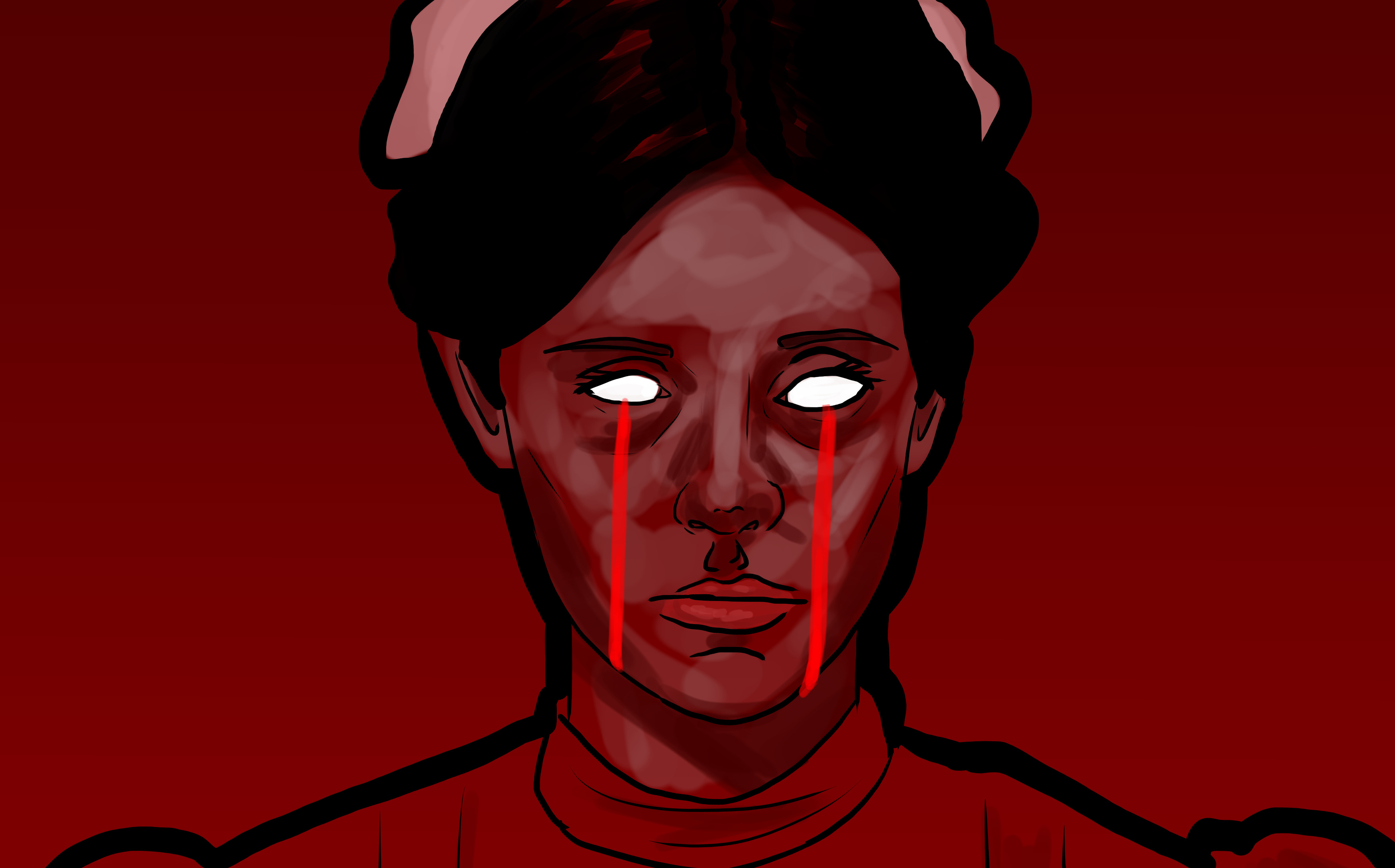
Pearl is a special movie. A horror movie focusing specifically on the complicated and fractured mind of a young woman—a dangerous young woman—and the complexities of life during a time of great panic.
Even against the backdrop of World War I and the Great Influenza Epidemic, the movie doesn’t pay too close attention to these things. Rather, it focuses on how these events affect Pearl, as her shattering mentality is the core plot of the film.

Borrowing elements from the iconic The Wizard of Oz film, Pearl sets itself firstly as a story about a farm girl wishing for more in her life. Her husband, Howard, enlisted in the army to fight in WWI, leaving her to stay with her parents.
Her father, paralyzed from the flu, is seemingly her biggest responsibility, at least in parts to her mother. As the film opens, it’s obvious that Pearl’s relationship with her mother isn’t exactly good.
From Howard leaving her, her mother treating her poorly, and her father being rendered paralyzed, Pearl is left feeling empty and hollow. She wants to have more than her mother ever had, possibly in spite, and wishes to be a starlette.
Pearl’s entire story is based in desire and longing. She craves freedom, validation, and a sense of stability. Yet, in reaching for these things, it only drives a wedge further apart from her and her dreams.

HUSBAND
Pearl feels intense resentment toward her husband for leaving her. Later in the film, during her confessional, she admits that she seeked out Howard so he could “take her away” from the farm. She also admits that she hates him for leaving her there, alone and trapped with her parents.
Not only that, but Pearl seeks unconditional love, which drives her unhealthy want of validation. Howard is no longer there to give her that feeling, thus resulting in her downhill mental spiral.
“Why did you leave me, Howard? I hate feeling like this. It's so pathetic. Do people like you ever feel this way? Figure you don't... you seem so perfect all the time. Lord must have been generous to you. He never answers any of my prayers. I don't know why. What did I do? What is wrong with me? Please just tell me so I can get better.”
One scene in the film, which derives from its Oz inspiration, shows Pearl finding a scarecrow on her way home from the theatre in town. She then proceeds to dance with it, fulfilling her fantasy through daydreams. She begins to freak out after seeing the projectionist’s face as the scarecrow, however, obviously infatuated with him. She screams and yells at the “projectionist,” tell him she’s married.
This would be short lived though, resulting in Pearl mimicking the act of intercourse with the straw-filled decoration.
In The Wizard of Oz, the Scarecrow wished for brains. It only makes sense that the scarecrow in Pearl would also represent the mind, though this time subbing in for her fragile mental state. Not only that, but this entire scene furthers Pearl’s dislike of Howard’s absence.
She’s lonely, yes, but also seeks satisfaction. Without Howard there is nothing to satisfy her, nothing to shower her with love and affection. It’s no wonder why she goes back to sleep with the projectionist after she fights with her mother.
MOTHER
Ruth is extremely strict in terms of what she lets her daughter do. In the beginning, you can understand the failing relationship between the two, probably even blaming the mother for being so cold. There doesn’t seem to be any love between them, especially with Pearl being forced to take care of her father and the farm.
However, we soon learn during the big fight that Pearl’s mother is so cold toward her because of intuition. Ruth watched what Pearl did behind closed doors and realized she was dangerous, keeping her on the farm so that she couldn’t hurt anybody.
This all ties into the scene of Pearl finding her mother crying herself to sleep. In the end, Ruth was actually a victim than anything else; she’s a German farmer during WWI, her husband fell paralyzed from the flu, and her daughter is extremely dangerous. As stated by Ruth herself, everything had been taken from her. Her family, her identity, and her happiness.
“If you want to leave, go. But if you fail... and YOU will fail, I want you to remember what it feels like because that's how I feel every time I look at you.”
Perhaps, though, Pearl understood this. Pearl said herself that she wasn’t stupid, in fact she’s quite the calculated person. She knew to seek Howard out because he came from a well-off family. She knew he was her ticket out until the war came. It’s not hard to believe that Pearl didn’t also understand that Ruth was suffering from depression, especially when we consider that, in multiple times through the film, explains that she doesn’t want to be like her mother.
Even during her confessional, she explains that Ruth just “wanted to feel safe,” and that she regretted what she did to her mother.
Pearl was already suffering from her own mental health, being drained from her daily chores and only wishing to dance.
Unfortunately, though, Ruth’s attempts at keeping Pearl home would be in vain, as the fight between mother and daughter would escalate to Ruth’s demise. A demise in which her father, helpless and sick, was forced to watch.
FATHER
Pearl’s father is a different case. We see that she actually loves and cares for him, much more than she does her mother. She doesn’t have much issues in taking care of her father. Instead, the issue comes from such a responsibility keeping her tied to the farm.
Pearl wants to be free, escape what’s holding her back in life, but it seems virtually impossible with her sick father. If she leaves, she’ll feel guilty for abandoning him. On the other hand, she’ll be miserable if she stays.
So, it isn’t a surprise when she first attempted to kill her father by trying to feed him to her pet alligator. This attempt falls flat though, as Ruth catches her before anything can happen.
Later, Pearl gets a second chance, this one more successful. She apologizes to her father and explains the she loves him before suffocating him with a pillowcase.
Similarly, we can relate this back to her confessional. She explains that she was once pregnant with Howard’s baby, but she hated it growing inside of her. She describes it as a sickness, never wanting to be a mother because it would only be another thing to keep her trapped at the farm.
Her disabled father was her new “baby,” having to be the mother to her father. He was causing her to be sick, just as the baby did before it died.
SISTER-IN-LAW
The sister-in-law, Mitzy, poses as a threat to Pearl.
Mitzy and Pearl both audition for a dance group that’s set to tour around the states, and Pearl is determined to be the girl that’s picked so she can live out her fantasy. She dances her heart out, but ultimately she’s denied her chance, causing her to lose her last shred of hope.
But the reason she was denied? “We’re looking for someone younger, blonde. All-American.” Exactly what Mitzy was.
Mitzy is everything Pearl wants to be: rich, free, and accomplishing her dreams. She’s the antithesis of Pearl, the reason why Pearl wasn’t able to be a dancer.
Despite the attempts of Mitzy trying to be friendly with her, it seems as if Pearl can’t push aside her jealousy. And, because of that, Mitzy ends up being her final victim, cut up by an ax that once chopped the fire wood.
Just as Pearl’s dreams were shattered, so was the image that Mitzy represented to her. The perfection, the normalcy… any sense of normality that she had left was gone, and that meant Mitzy had to be gone too.

The film ends with Howard coming back from the war, coming home to find the family dead at the table, ready for dinner. He finds Pearl, who smiles at him both devilishly and painfully, before finally saying: “I’m so happy you’re home.”
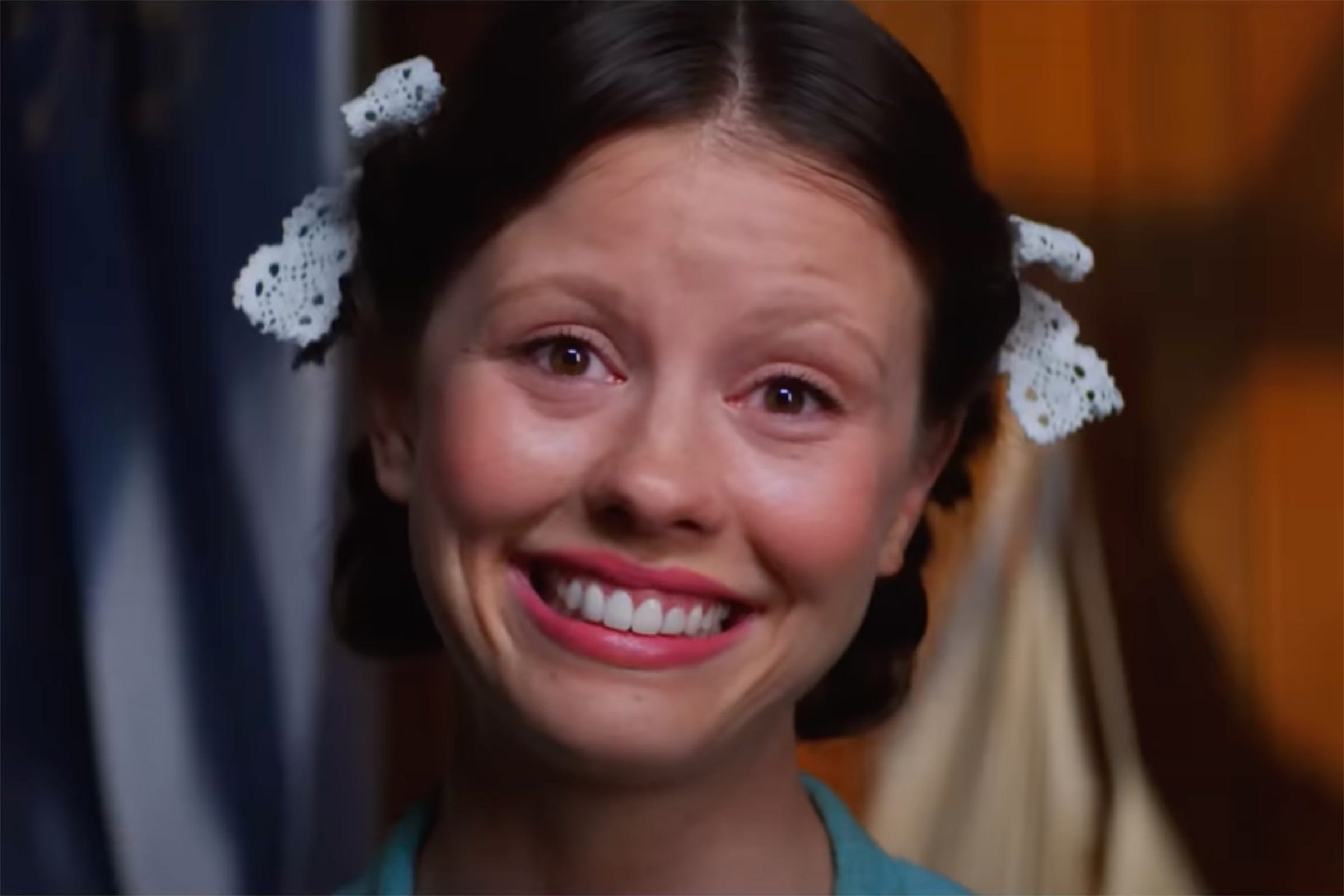
You would think that would result in either Howard leaving or being murdered as well, but we see in X that he actually stays with Pearl. So, match made in heaven, I guess.
Pearl is a movie that represents that fragility seen in a trapped and uncertain mind. Gen Z flocked to the movie because there was a sense of relatability in Pearl’s life, mostly in the idea of feeling hopeless in your dreams. Things out of your control hold you down and make you feel like you’re going crazy, making it feel impossible to escape.
It was a similar experience that happened with Joker, in which people could relate to the concept of mental illness not being taken seriously in American society, lacking reliable care of those seeking help.
In both of these films, the point is to show the exaggerated outcome of what could happen if these things are not resolved. The most disastrous, unhinged possibility. They’re meant to make us uncomfortable, disturbed, and uncertain.
Pearl is unstable, the events she experienced acting as a catalyst to her derangement. Pearl, as described by the tagline of the film, is an “X-tradonary origin story.”