

Six Feet Below
On feeling trapped and what it means to keep going

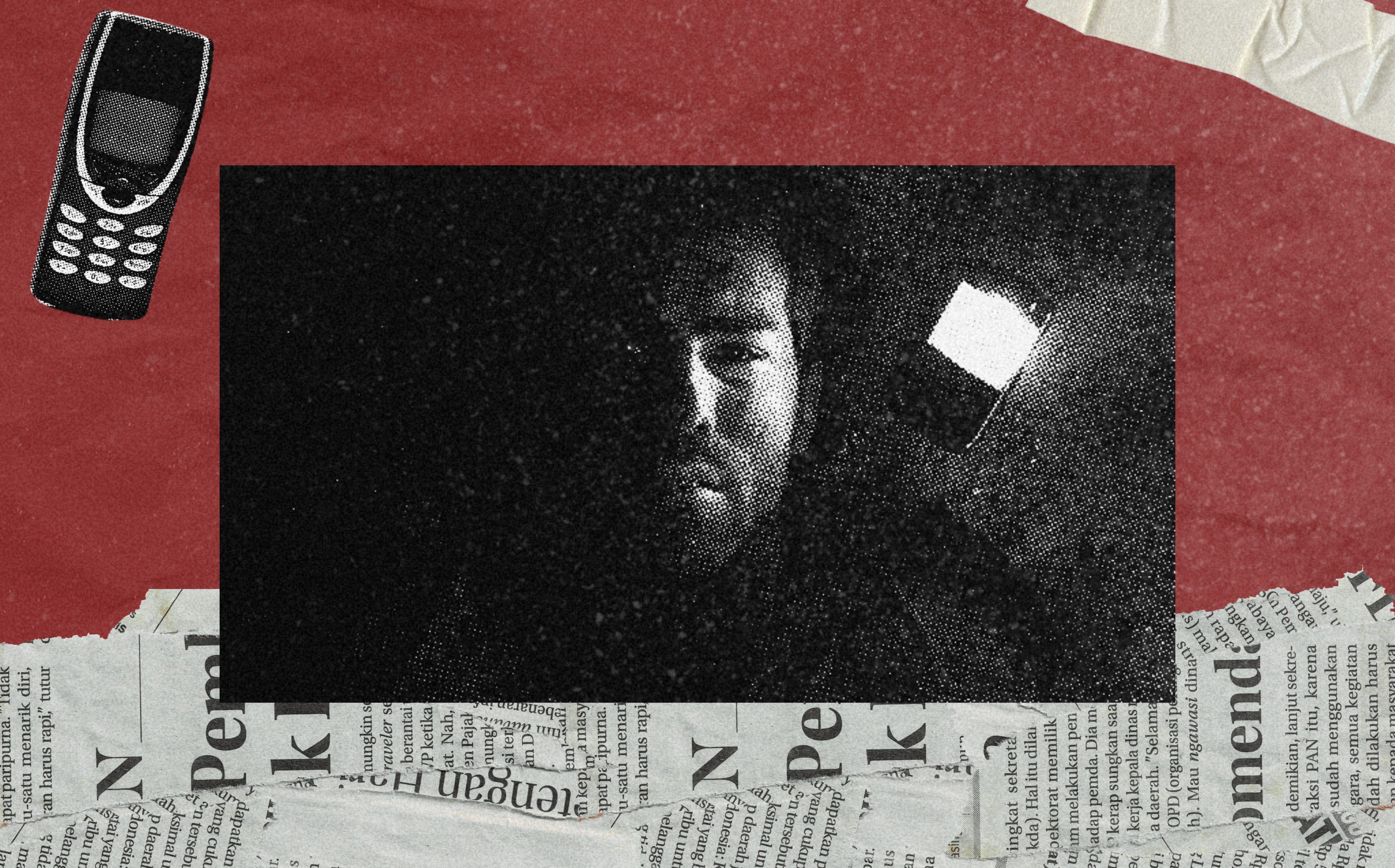
The human mind is conditioned to think in routines, rituals, and logic. Even the most spiritual of people have moments of despair, with the light dwindling as hope escapes.
This is normal.
As the world evolves, so do its problems. Some are visible. Others are buried deep beneath the surface.
This isn’t normal.
And yet we pretend it is.
In this tunnel is nothing but darkness. No light reaches the vast cavern. We have climbed in too far and we have no flashlight—its batteries died long ago. We cannot see a thing in front of us.
This is not like the darkness in our bedroom when we sleep at night. Here, our eyes never adjust to the blinding darkness.
At this point, we cannot move. The walls press against us. With every breath, they seem to close in even more. Our chest is being crushed by the earth itself, reminding us how little space remains.
Above us is the world we crave, the world we took for granted.
And now, we are in despair.
The only thing we can do is wait. We cannot save ourselves this time.
Even though we feel hopeless, our heart is not fully gone. In the back of our mind, we can feel that someone is looking for us.
So we tell ourselves that someone is coming.
That they are digging.
That we just need to hold out, and we will see the light soon.
But for now…
We remain trapped.

PART I: BURIED
In 2006, Paul Conroy was buried alive as a prisoner of war in Iraq.
He was a civilian truck driver, with no background in any type of government or military.
Despite this, his kidnappers asked for a ransom of $5 million, which was never paid, as the State Department does not negotiate with terrorists.
Conroy did not survive the incident. The Americans found the body two weeks later.
The Archive was able to obtain the phone call recordings of Conroy’s last hours, with special permission from the respective parties.
Out of respect for Conroy, The Archive will only be referencing transcripts rather than actual audio recordings throughout this file.
The first phone call that was found on the call log was to 911.
2006-BB-01
Classification: Public Release Approved
Evidence Type: Telephone Transcript
──────────────────────── TRANSCRIPT BEGINS ────────────────────────
[911 OPERATOR]: Yes, 911.
[CONROY]: You have to help me, I can’t breathe.
[911 OPERATOR]: Sir?
[CONROY]: I’m buried in a coffin. Please, help. Send someone to find me.
[911 OPERATOR]: Sir, slow down. What is your name?
[CONROY]: Paul. Paul Conroy.
[911 OPERATOR]: Okay, Mr. Conroy. Can you tell me your location?
[CONROY]: I don’t know. I’m in a coffin. I don’t know where. Please, help. I’m scared.
[911 OPERATOR]: You’re in a coffin?
[CONROY]: Yes. It’s like one of those old, wooden ones.
[911 OPERATOR]: How are you calling me right now?
[CONROY]: From a cell phone. There was an old cell phone in the coffin.
[911 OPERATOR]: You’re calling me from your cell phone?
[CONROY]: Yes. No, no… it’s not my cell phone. But yes, I’m calling from a cell phone.
[911 OPERATOR]: There was a cell phone in the coffin when you climbed in?
[CONROY]: Yes. What? I didn’t climb in though.
[911 OPERATOR]: How did you end up in the coffin, sir?
[CONROY]: I was put here.
[911 OPERATOR]: In the coffin?
[CONROY]: Yes. Please help.
[911 OPERATOR]: And you’re saying the coffin is buried?
[CONROY]: Yes. I’m a truck driver. I’m an American. It’s hot in here and I can’t breathe. Please.
[911 OPERATOR]: Do you know your location, sir?
[CONROY]: I told you. Some—somewhere in iraq. Please help.
[911 OPERATOR]: Iraq?
[CONROY]: Yes. I’m a truck driver. I’m an American. I work for CRT.
[911 OPERATOR]: Are you a soldier, sir?
[CONROY]: No! Please, you have to listen to me. I’m a truck driver. I’m an American. I’m a civilian contractor working in Iraq. We were attacked in Baqubah. And they shot all of them.
[911 OPERATOR]: They shot who, sir?
[CONROY]: All of the other drivers.
[911 OPERATOR]: And you’re saying this happened in iraq? The country?
[CONROY]: Yeah. Listen to me. They gave me a safety number. And it was in my wallet, and I don’t know where it is now.
[911 OPERATOR]: Mr. Conroy, this is 911 emergency in Youngstown, Ohio.
[CONROY]: Ohio?
──────────────────────── TRANSCRIPT ENDS ────────────────────────
The next call was to his home phone where he left a message. The third call was to his wife’s cell phone, where, again, he left an urgent message.
Finally, his fourth call was to 411 to an operator, in which he asked to be connected to the FBI. He was informed that he had to pick a city. He chose Chicago.
The Chicago office listened to his story and then asked for his social security number before the signal was lost.
When Conroy got signal again, he called his employer. He lost his safety number, so was immediately transferred to another department. However, he was sent to voicemail.
The next call was to his kidnapper. He was asked for a ransom.
The next was to Donna Mitchell, a friend of his wife’s. He asked her for the number of the State Department. She hung up because he yelled at her. He called her again and apologized. She gave him the number.
Finally, he called the State Department. From there, he was connected with Dan Brennar, who was in charge of hostage situations in Iraq.
Despite his efforts, none of these calls made a difference.
The oxygen wasted on these calls only led to his demise, as if he were simply delaying the inevitable. It was no fault of Conroy, of course, but rather the very systems he relied on to save him.
911 failed to understand the situation. The FBI worried about social security numbers. His employer focused on protocols. The State Department, ultimately, gave him false hope and failed to properly locate him.
Conroy’s entire world became a phone. Every call for help reduced his oxygen. His breath was wasted explaining the impossible to people who could never truly reach him.
PART II: ENTRAPMENT
The chances of being buried alive are practically zero to none.
Yet, Conroy’s case terrifies us. It is not because we too believe we will be buried in a coffin with no oxygen, but rather because the mere idea of entrapment plagues our everyday lives.
Conroy’s story hits a nerve. We have all experienced what it feels like to be trapped, whether it be from our own means or outside of our control.
We feel trapped at our job. We feel trapped in our debt. We feel trapped in our marriage. We feel trapped in our everyday lives.
The entrapment feels less like a suffocating coffin and more like the Ouroboros, in which we constantly face the same problems yet never seem to find a change.
Conroy's final hours became their own Ouroboros.
No matter who he called, every conversation ended the same way. Procedures replaced urgency. Policy replaced humanity.
Call after call, Conroy’s fate was already sealed.
They were never going to rescue him. It was a pipe dream that Conroy simply believed in because he had so much more to live for. A wife and child waited for him back home, and yet, his entire existence was reduced down to another hostage case unsolved.
The State Department was never going to dig Conroy up alive. Despite how much they wanted him to believe that he would be rescued, he was simply used as another pawn in a needless war.
They built his hope out of false promises. They never knew how they were going to find him. Thus, Conroy’s death was inevitable.
Brennar had told Conroy that they had saved someone in a similar situation before. His name was Mark White.
Conroy believed him. In fact, the only thing that kept him going in that coffin six feet underground was that they had found Mark White.
Yet, in Conroy’s final moments, when Brennar said they were digging him up, there was no rumbling above him. No, they weren’t even close.
On that phone call, Brennar admitted that they had dug up Mark White’s coffin.
Conroy’s phone battery died right after.
PART III: HOPE
The Archive scoured through hours of phone logs.
One thing we could not fault Conroy for was his hope.
He kept going. He kept trying. No matter what, it seemed as if he at least pretended to believe he would make it out of his demise.
And yet, real life entrapment is rarely underground. It’s in skyscrapers, suburban homes, and micro apartments.
It’s in a relationship full of toxicity. It’s in a relationship built upon poor communication. Sometimes, it’s in a relationship that doesn’t even exist, leaving one to wonder about when their time will come.
It’s in a corporate office. It’s in meaningless meetings meant to drain you. It’s in cubicles that cage you like zoo animals.
It’s in warehouses and construction sites. It’s in the work that is seen as less yet produces the most physical pain.
It’s in stores and fast food joints. It’s in being spat on because a customer didn’t like their burger.
It’s in student loans, credit cards, and car notes. It’s in rent that’s due next week.
It’s in feeling lonely despite having a family. It’s in feeling unfulfilled despite being the boss. It’s in feeling behind because you haven’t reached milestones.
Entrapment is not black and white. In fact, it’s hardly visible. It’s hidden between the cracks of our walls, seeping through and poisoning us all like mold spores. There’s an idea of making progress, of feeling content with our lives, but then in the back of your head you keep hearing the same thing over and over again.
“You’re still exactly where you were a month ago,” it says. “You’ve been doing this for three years.”
Most of us are not suffocating in a wooden box. We do not smell the dirt we are buried in. We do not hear the worms wiggling through the roots.
No, most of us are holding our throats in fear of what we have inhaled. The toxic gas of the Ouroboros fills our lungs, trapping us in an invisible prison where our last conscious thoughts run rampant through our minds.
But what else can we do but think “I am going to be better soon.”
In those last moments of torture, what else can we tell ourselves other than that it will be beautiful soon. It is not that we are dying, but rather we are being rebirthed.
It’s the seedling of hope implanted in all of us. Our chest tightens, our hearts hurt, and everything is confusing. Yet, we can still sit there in our moments and think “I’m going to be okay.”
Conroy did the same. No matter how horrible his circumstances seemed, he held onto hope until the very last moment. He felt he would be saved. He felt someone would have to rescue him.
Hope is the only thing that never stays buried.
Conclusion
The following is a message from The Operator:
Conroy may be gone from this plane, but he is still present in what can be learned from him.
Hope is humanity's oldest survival instinct.
Hope can come from many places. It may come from yourself, your family, your friends, or your faith.
Hope is deeply ingrained in our souls. Without hope, there are no vessels for these souls to reside in.
Feeling trapped can feel torturous. It can feel like you’re suffocating in your own burdens.
Across every case the Archive has recovered, one constant remains: hope is always the last thing to leave us.
The only way out is through.
If you believe in The Archive’s work, you can support further investigations here.