


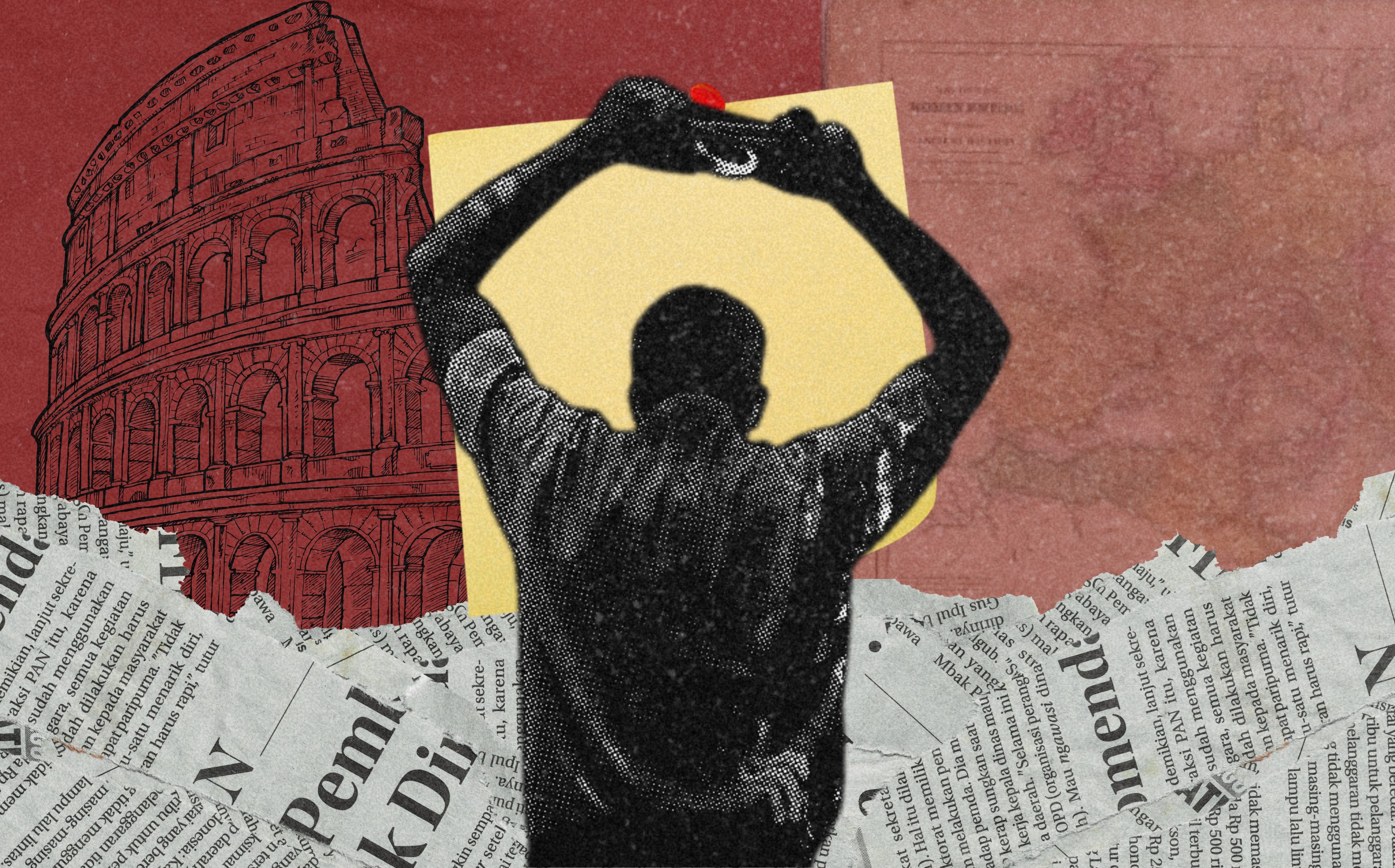
There is no denying that our history is full of violence.
Eras are marked by which war was fought. Empires were built upon slave labor. Entertainment was focused on the suffering of others.
It would be a lie to say that humans ever out grew those flaws. Rather, they became more flexible. More hidden.
The Western Roman Empire, for example, fell due to political corruption, high inflation, overexpansion, invasions, and many, many other issues that plagued it.
However, most people remember Ancient Rome for everything else: the coliseum, the marble statues, the allure of a “perfect” civilization.
At its core, the coliseum served as the inflated stomach of Rome’s body, not quite important enough to pulse like the heart, but certainly needed to keep the empire afloat. It was an entertainment venue of prowess, showcasing the best fighters of the time, known as the mighty gladiators.
These fights kept the masses entertained, and therefore pacified and in the Emperor’s control at all times.
Yet, as we look into the modern life of a human, in which way have we adapted the gladiators in this new life? Some may say the MMA fighters or boxers. Others may say American Football.
To that, The Archive must argue what we always do: it’s not quite that simple.
Nay, it is not the athletes we should be looking at, but rather the everyday civilian.
There is no better place to look at for this comparison than the infamous 2016 experiment that happened in Bogotá, Columbia.

PART I: Recruitment
It is not lost upon The Archive that our team delves into topics that seemingly loop into one another. At some point, the cases all start to say the same thing, exposing the entire basis of what The Operator created The Archive for in the first place.
Within all of the systems that the modern human works in, there is always a push-and-pull between the authoritative and the laborer.
Perhaps that is no better seen than The Belko Experiment—which took office workers and forced them into a battle royale environment to fight to the death.
That may sound familiar.
It may even sound like a joke. After all, doesn’t the modern worker feel like they are fighting for their life every Monday?
Allow us to first explain the premise of the experiment. According to the study’s summary:
The following experiment was to study human behavior in a life threatening situation within the corporate environment. 80 subjects were tested—throughout the experiment, 1 subject survived. We concluded that extreme stress results in one of three outcomes: refusal, validation, or surrendering.
The company who conducted the experiment, who shall not be named here, placed 80 people into a corporate work environment. One day, they were placed under locked down and told to kill each other.
Throughout the experiment, two factions were created: 1.) believing it was possible to escape, beat the system, and therefore evade murder and 2.) immediately following the rules in order keep themselves alive. Others who did not belong in either faction surrendered themselves immediately.
So, then, The Archive must come back to our initial theory: the modern gladiator is the everyday worker.
PART II: Battle
Gladiators came from many places. It is said many were slaves and criminals, with few even being random civilians attempting to gain fame and fortune.
Rome relied on these fighters to be used as pacifiers. Gladiators fought in the coliseum to entertain the masses, keeping them at bay by providing them aggression through sport.
Many gladiators fought to eventually become free men. Some fought simply for the fame. Others were simply forced into it.
In modern life, the gladiator has seemingly disappeared. His spirit is remembered in our history books, but his craft has died with the Roman Empire that once stood so mighty.
At the same time, The Archive must stop and look at our timeline more closely.
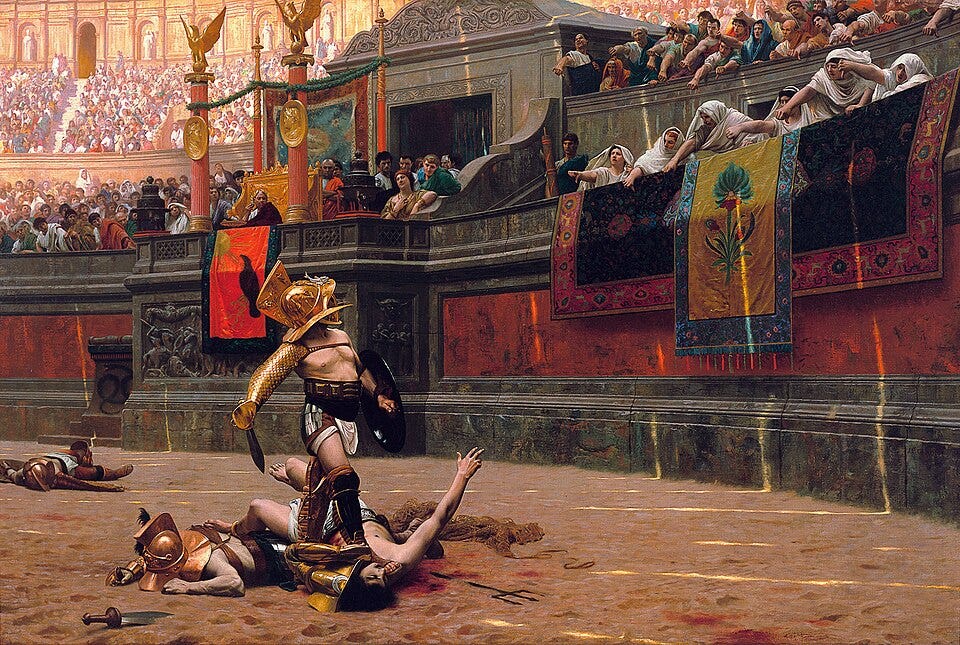
Perhaps it is not that the gladiator died, but rather that his work had to become far more flexible. He no longer competes against another with armor and a sword.
There are lions or tigers to hunt. No chariots to be pulled by horses.
The emperor does not clap for you. The crowd no longer cheers.
No, the gladiator now spends his time behind a wall, hidden from the world while he faces man after man in mind games. You see, the gladiator must not fight with fists, but with his brain and spirit. He can no longer throw punches, or dodge an attack, because there is no single reason he must.
Instead, he must keep his head down. Sometimes, he looks at Excel sheets. Other times, he is forced to listen to a presentation. Some cases, he must drive the forklift. He may even have to flip a burger.
But he mustn’t speak too freely. But he should speak with calculation. At the water cooler, he needs to get into someone’s head about the promotion coming up. At the breakroom, he must give a backhanded compliment to his competition.
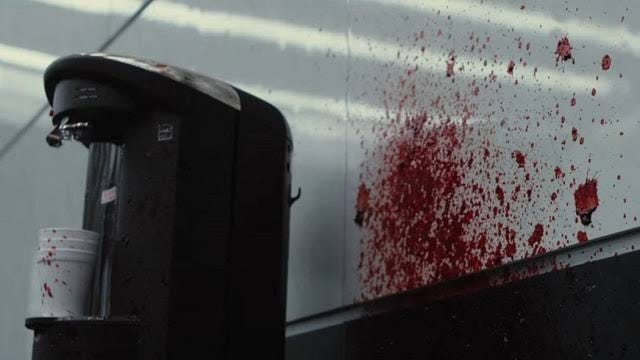
You see, the gladiator isn’t a traditional fighter anymore. Sure, he may still claw his way to the top of the ladder. He may even one day become rich. But none of that really matters.
The gladiator does not fight to entertain the citizens anymore.
He fights to entertain the emperor and his empire.
PART III: To Be Weak is to Die
He who lines the seats of the coliseum holds the power of the empire.
The emperor watches the gladiators fight in glee. It is entertaining to see his subjects act so clumsily, fighting for freedom they will never earn. It is a cruel yet exciting battle, to see how they fight so hard for something that is a lie.
The emperor continues to line his pockets as the gladiators continue to funnel him the money.
The gladiators fight, and they fight, and they fight.
They use staplers, tape dispensers, and pens as weapons. They throw insults and create alliances.
They go home with scars. Not physical ones, of course. Their brains simply change, feeling beaten and defeated everyday they continue their battle.
There must be something they are fighting for. But what is it? Is it really freedom? Is there ever freedom under tyranny? How can one truly reach the state of nirvana while living in a state of stress?
The emperor does not feel these things. He instead feast on steaks and drunkens himself with the finest of wines. He pretends to understand the art that his gladiators create, acts as if he sympathizes, but most of the gladiators have already figured him out.
He is not a real leader.
He is not even human.
This all feels strangely familiar to me. There is something so exhilarating about my fist to his face. The punches are devastating. They hurt my knuckles as much as they hurt his skull, and yet I cannot keep myself from stopping.
I can barely recognize what he looks like anymore, but the whines he lets out make me feel euphoric.
This feels so familiar. As if I’ve done this before. As if I have always done this… fighting, battling… using violence as a means to say something.
At the same time, sitting at my cubicle made me feel this same way.
When I would take calls and hang up with no goodbye I felt just like this. When I would tell Sophie that her SOP had several typos I felt this way. When I would make Ben panic because I had given him the wrong numbers for his report I had felt this way.
It all felt just like this. Like I was beating their faces in. Like I was truly fighting for something.
This feels so familiar.
PART IV:
The Archive cannot help but see the comparison between gladiators and The Belko Experiment.
To fight to death and to be observed.
It is all very telling in our human behavior. We continue to do the same things over and over again and expect something different, despite knowing the outcome is always the same.
Yet, The Archive finds it fascinating how the experiment ended.
One subject survived. Only one.
Out of the 80 subjects, one survived.
That may not seem like much. At the same time, it means everything.
Eventually, gladiators could win their freedom.
Perhaps then, that means even the modern worker can too.
CONCLUSION
We did not extensively cover this file like we typically do. This is because we are simply revisiting this, adding on to our original release that can be accessed here.
However, we at The Archive believe it is essential to remind our readers about the reality of our new world.
The gladiators are not gone. They are simply fighting a new battle.
True, it is not nearly as much of a spectacle as it once was. The gladiator of today has been worn down, stripped of his spirit. He is exhausted.
It is becoming harder and harder for him to fight every day.
But remember: freedom is inevitable.
Empires always fall.
The Archive shares external investigation work weekly. This week, we’d like to share a file from Lucas Mangum.


If you believe in The Archive’s work, you can support further investigations here.
Love this. I've definitely witnessed some cutthroat shit in the workplace, so something like Belko Experiment doesn't seem so far-fetched. Thanks for the shoutout.