

The Godzilla Suit Incident
How The Man in The Suit embraced tragedy through monsters


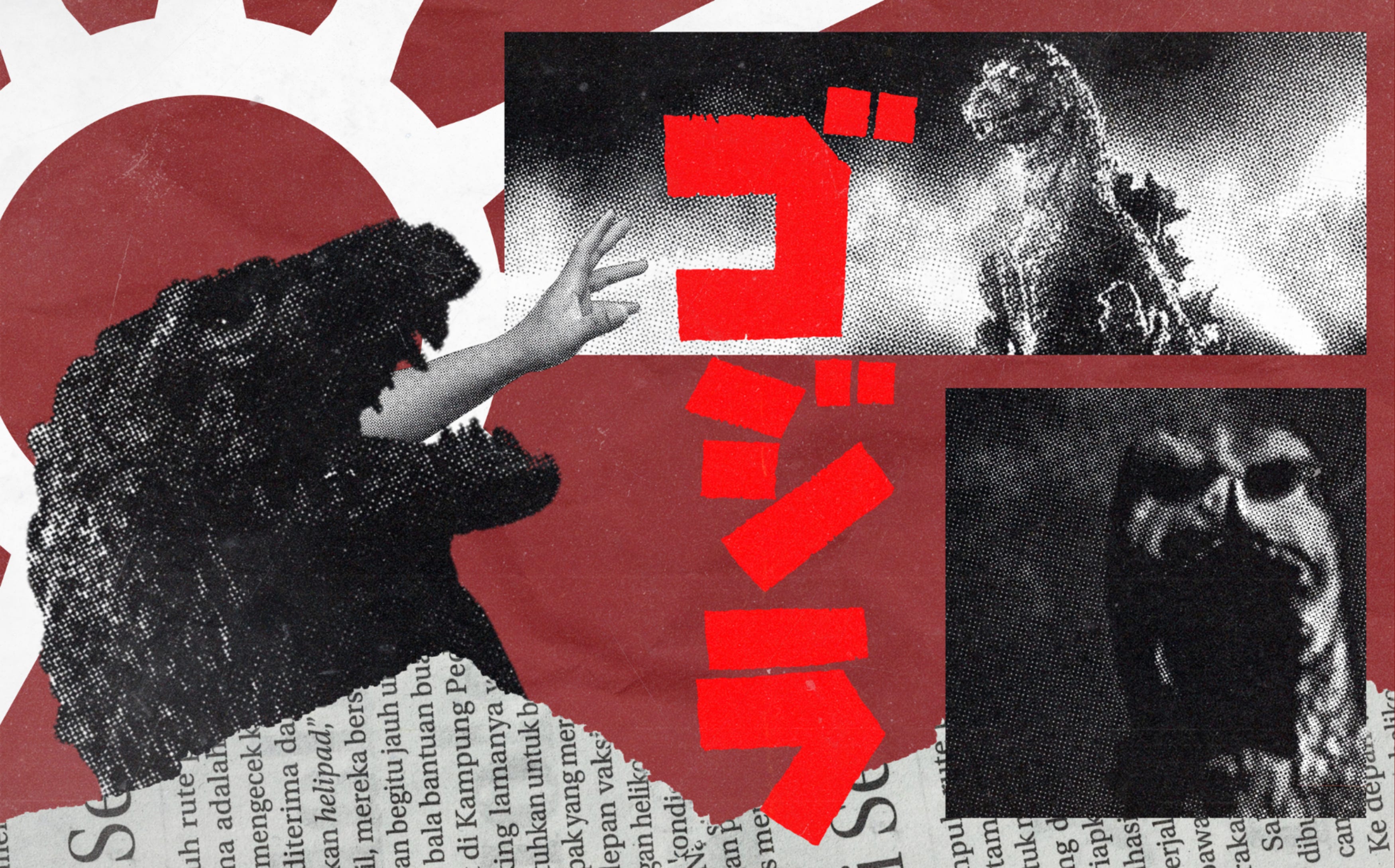
History is full of monsters.
Oftentimes, the monsters are remembered more than their victims.
Tragedy floods mankind with its oceans of sorrow, causing tsunamis of pain and suffering. People drown from the decisions of a select few, their heads held underwater as they flail for air, gasping for mercy in a sea of chaos.
The Archive does not need to document these events.
We know of them all very well.
Yet, history continues to repeat itself despite the ghosts of the past that still haunt us.
That is what Godzilla is—a ghost of the past, created to remind us of the reality that many people were taught to forget.
But not Godzilla.
Godzilla was born from the radiation of the H-bomb. Our universe’s TOHO Studios created the giant franchise to partially remind the masses about the dangers of forgotten history. Ironically, in another world, they may have created their own monster—in the same suit they used to teach that lesson.
In order to conduct more research into TOHO’s practices, The Archive consulted The Godzilla Papers for their expertise. Despite the hesitation of our staff, The Operator insisted that the organization is a very reputable source. Perhaps he should say that to Egg, but we digress.
Below is the documentation provided by their Field Office Team.
ARCHIVE FILE — KLCF
EXTERNAL RESEARCH ATTACHMENT
Source: The Godzilla Papers
We, the Field Office Team supporting Mission Kaiju_Love_Care_Futures_02026, are honored to provide some historical grounding for this release of Slasher.
In the spirit of transparency, we are freaked out by The Man in The Suit—so much so that we only watched the first installment. We are indeed, as Mission HQ pointed out, “scaredy-cats.” We thank archivist Skyla for her patience and kindness. At her suggestion, we instead watched The Film Theorists’ commentary video, Film Theory: The TRAGEDY of The Man in the Suit.
While the ethos of The Man in The Suit goes against how much we on the Field Office Team would like to (consensually) smooch Godzilla on the nose1, the storytelling and themes in The Man in The Suit complement those in the Godzilla franchise: this is a story of what can happen as a consequence of unprocessed grief, nuclear weapons, and corporate greed.
There is a meta-theme, here, as well: Unknowingly, the creator and imagination behind The Man in The Suit, was bullied so badly by purist Godzilla fans that he cancelled the series for the sake of his mental health. This is deeply worrisome, and we believe this points to a few of humanity’s most significant issues:
It seems we do not understand our own power, or, if we do, we tend to be wildly irresponsible with it.
We pretend that accountability is the same as policing, and we dress up our bullying as psuedo-intellectual snobbery. This is High Fidelity behavior at its worst.
We are threatened by imagination, and we tend to use “take-down” energy against the most vulnerable among us. Consider if these fans had taken aim with this same energy at nuclear proliferation, ICE, or political officials who are actively causing harm to our communities instead of taking aim at Unknowingly. In layman’s terms: what a violent waste of time it was to bully this creative young person.
As a matter of historical grounding, we would like to offer some background on the Godzilla suit in this universe before The Archive takes you to the universe in which the suit/man relationship was less … symbiotic.
We cannot discuss the Godzilla suit and suit acting without paying homage to two (human) giants:
First, we must pay respect to Haruo Nakajima, the original Godzilla suit actor. As Graham Skipper tells us in Godzilla: The Official Guide to the King of The Monsters:
“Actor Haruo Nakajima played Godzilla in the suit, bringing his athleticism and martial arts background into the character. He also went so far as to study bears at the local zoo for inspiration, and even incorporated elements of classic Japanese Noh Theatre. His performance made Godzilla anything but “just a guy in a suit”.
Nakajima was also the first to actually choreograph the monster fights, as outlined in Theme Four of Godzilla Field Report No. 3 : Trust the people closest to the work.
Something that The Man in The Suit captures very well, indeed, is the danger of suit acting. In our universe, there were multiple incidents of suit actors almost drowning, suffocating, and/or overheating. The suits were heavy, and many stunts required Godzilla to break out of sand, get buried in ice, or sink into water at Toho’s Big Pool. What we’re saying is: this was hard, dangerous work!
Second, we must pay respect to the late, great Eiji Tsubaraya, Director of Special Effects at Toho Studios. Tsubaraya and his team were responsible for building the intricate miniature sets for suit actors to destroy. At first, Tsubaraya didn’t have the respect he does now. In Godzilla: The First 70 Years, Steve Ryfle and Ed Godziszewski offer a look into the studio’s internal politics:
The Toho Special Effects (SFX) Department was originally founded in 1937 and was infamously involved in the production of wartime “national policy” films, which garnered technical awards and earned prestige on the studio lot for Eiji Tsuburaya and his crew … When Toho resumed making films with special effects in the early 1950s, Tsuburaya returned and assembled a ragtag group of old hands and new recruits, most of them non-studio employees and part-time workers, who were now viewed as misfits and outcasts on the lot. “When we were working (on Godzilla), everybody, including the company itself, was making fun of us, and no one took us seriously,” recalled Izo Kaimai, a monster-suit sculptor. “Anyone who wanted to do special effects was considered a crazy person.”... As their efforts paid off at the box office, the SFX team’s status soon improved. “I joined Toho [in 1961),” Shirasaki said. “It was the best time. Godzilla was a hit, and then Rodan and Godzilla Raids Again, all those films. The department was now fully respected and accepted. We were like the kings of the studio.”
While the relationship between man and suit is the focus of The Man in The Suit, we posit that one cannot discuss the Suit without also discussing the perspective shift provided by Tsubaraya and crew’s incredible work on miniatures and other special effects. Without these effects, Godzilla would have simply been a Very Big Lizard instead of the (smoochable) behemoth of pop culture he is today.
While Mission HQ directed us to steer clear of the topic of Godzilla’s funeral, we don’t want to. In The Last 70 Years, Ryfle and Godziszewski describe what we think is a beautiful homage to the King of the Monsters:
“After production of Godzilla wrapped, Toho gave the monster a mock burial at sea. The film’s lead actors, Akira Takarada (Ogata) and Momoko Kochi (Emiko), joined by the (empty) Godzilla suit, rode through the streets of Tokyo in the back of a truck, waving to a bemused public along their route. … With a group of children looking on, Takarada played the ukulele and serenaded Godzilla with the Hawaiian folk song “Aloha Oe” (”Farewell to Thee”) as Kochi placed a lei around the monster’s neck and performed a hula dance. … a Shinto priest performed ceremonial funeral rites for Godzilla, and the boat set sail for Tokyo Bay. There, Godzilla was hoisted over the side on a winch by both Takarada and Kochi. Pausing the ceremony for a moment, Takarada donned a diving suit to accompany Godzilla as the monster was lowered into the water while Kochi tossed in a bouquet of flowers, calling out, “Sayonara, Godzilla!” Godzilla finally descended into the water to its final resting place, never to be seen again.
Or so it was reported at the time. The event was actually an elaborate publicity stunt, staged to generate press coverage. A photo essay of the event was published in the February 1955 issue of Heibon magazine.
Based on these photos, many have assumed the original Godzilla suit was lost forever. In reality, it was retrieved from the water and returned to the studio for storage. But what eventually happened to the original Godzilla suit after that is a mystery.”
Maybe, just maybe, once at the bottom of the sea, the original Godzilla suit made its way to Unknowingly’s universe.
This is a question for The Archive, as this makes all of us at The Field Office feel very squeamish and full of fear.
END FILE.

PART I: HISTORY IS ERASED
The first Godzilla movie was released in 1954.
Before the masses were ever introduced to the iconic kaiju, TOHO had to film the movie.
Filming had reportedly gone fine, although the suit actor, an unknown name at the time, had insisted had insisted on never removing the suit. According to witness accounts from crew members, the stunt actor was never seen without Gojira’s face.
It was as if the suit was stuck to him. They were… inseparable.
“It was like if he was addicted to the suit. Like if it’s calling his name.” - A TOHO Producer (Translated from Japanese)
Although strange, many assumed he was simply passionate about his craft. A method actor, if you will—embodying the character to its fullest in order to give the audience the best performance he could.
This is where the public press releases differ from what actually happened.
Production notes indicate that something went very wrong on set.
The Archive obtained those notes.
That is where an American whistleblower comes in.
The “American” is an anonymous insider who worked on the production of the Godzilla films, leaking the incidents of TOHO’s suit actor.
In one such case, the suit performer collapsed on the floor, having trouble breathing. However, when crew members tried to take off the mask, it wouldn’t budge.
From the American’s leaks, it was obvious that there was a medical emergency.
The actor’s breathing was shaky. His breaths rattled beneath Gojira’s mouth like one of the creature’s roars, though not nearly as mighty.
Finally, the crew managed to rip the mask off.
Blood dripped from the suit’s neck to the set floor. Strings of flesh dangled from the thing.
Inside, flesh fused to the cotton padding. He was one with the suit, melted into the core of the kaiju like hot tar on flesh.
Doctors concluded that his skin had “inflated” to the point of infusion. His bones even contorted themselves to fit the height of the suit.
He was a werewolf in reptilian clothing.
Do you know what we suffered? Why do you pretend to forget?
Was the man in the suit even still human?
PART II: HISTORY REFUSES TO DIE
Despite the incident, TOHO continued producing Godzilla films with the man in the suit.
It is documented that he lost his vocal cords due to the fusion incident. His behavior grew animalistic in nature, responding only with growls. The suit now acted as a second skin, allowing the performer to feel through the rubber.
As each movie released, he became less of an actor and more of a trained animal.
He was no longer the man in the suit. He was the Suit Man.
In 1962, King Kong vs. Godzilla was released. It was dedicated to the actor who played Kong, who died while filming.
It is rumored that he suffered an injury after falling and hitting his head.
It is leaked that the Suit Man purposely drowned him.
In the same year, the American whistleblower received a tape in the mail from an anonymous mailer. The tape contained only text.
Below is the translated message recovered from the tape:
𝚈𝙾𝚄 𝙳𝙾𝙽’𝚃 𝚄𝙽𝙳𝙴𝚁𝚂𝚃𝙰𝙽𝙳.
𝚈𝙾𝚄 𝙺𝙸𝙻𝙻𝙴𝙳 𝙼𝚈 𝙵𝙰𝙼𝙸𝙻𝚈.
𝚈𝙾𝚄 𝙰𝙼𝙴𝚁𝙸𝙲𝙰𝙽𝚂 𝙲𝙷𝙴𝙴𝚁𝙴𝙳 𝚆𝙷𝙴𝙽 𝚆𝙴 𝙻𝙾𝚂𝚃.
𝚆𝙴 𝙻𝙾𝚂𝚃 𝙾𝚄𝚁 𝙷𝙾𝙼𝙴𝚂. 𝚆𝙴 𝙻𝙾𝚂𝚃 𝙾𝚄𝚁 𝙵𝙰𝙼𝙸𝙻𝙸𝙴𝚂.
𝚈𝙾𝚄 𝙽𝚄𝙺𝙴𝙳 𝚄𝚂. 𝚃𝙷𝙴 𝙽𝚄𝙺𝙴 𝚃𝙾𝙾𝙺 𝙼𝚈 𝚆𝙸𝙵𝙴. 𝚃𝙷𝙴 𝙽𝚄𝙺𝙴 𝚃𝙾𝙾𝙺 𝙼𝚈 𝙺𝙸𝙳𝚂. 𝙷𝙸𝚁𝙾𝚂𝙷𝙸𝙼𝙰 𝚆𝙰𝚂 𝙾𝚄𝚁 𝙷𝙾𝙼𝙴.
𝙸 𝙻𝙴𝙵𝚃 𝙵𝙾𝚁 𝙰 𝙱𝚄𝚂𝙸𝙽𝙴𝚂𝚂 𝚃𝚁𝙸𝙿. 𝚈𝙾𝚄 𝚃𝙾𝙾𝙺 𝙴𝚅𝙴𝚁𝚈𝚃𝙷𝙸𝙽𝙶 𝙵𝚁𝙾𝙼 𝙼𝙴.
𝚂𝙾 𝙸 𝙳𝙴𝙲𝙸𝙳𝙴𝙳 𝚃𝙾 𝚁𝙴𝚃𝚄𝚁𝙽 𝚃𝙷𝙴 𝙿𝙴𝙰𝙲𝙴. 𝙱𝚈 𝙶𝙴𝚃𝚃𝙸𝙽𝙶 𝚁𝙸𝙳 𝙾𝙵 𝙰𝙻𝙻 𝚃𝙷𝙴 𝙿𝙴𝙾𝙿𝙻𝙴 𝚆𝙷𝙾 𝚆𝚁𝙾𝙽𝙶𝙴𝙳 𝚄𝚂.
From all the evidence we have seen, The Archive concludes this tape was from the Suit Man.
Godzilla came from radiation.
The Suit Man came from the after effects.
He became the shadow of Hiroshima’s tragedy, embodying Oppenheimer’s most chilling quote in a much more cruel and horrific way.
Gojira refuses to let the victor be remembered.
Shadows from those who died in the bomb at Hiroshima were plastered on walls. Their memories lived on in a tragic mural to remind the world of what monsters do.
Godzilla is the walking shadow of Hiroshima.
The Archive’s most convincing evidence?
King Kong’s suit actor was American.
PART III: HISTORY RESURFACES
Tragedy is never truly forgotten.
Despite how hard textbooks may try to polish the image of our history, reality never changes.
Victims will always remember the true impact. Justice will always prevail despite the constant censorship within schools.
One way or another, the truth will always come to light.
In 1964, the Suit Man escaped from TOHO’s grasp. Local newspapers at the time reported that a Godzilla suit roamed the streets as a publicity stunt.
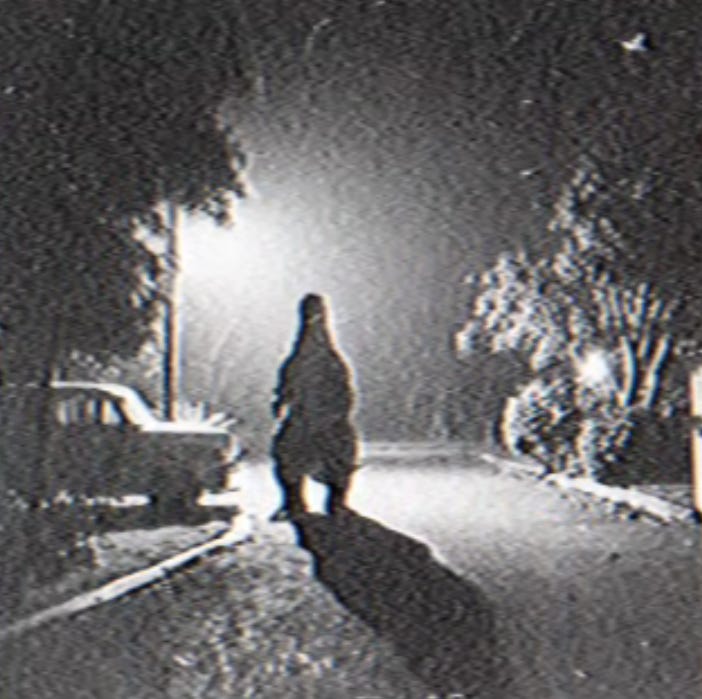
It was never about promoting a movie.
The Suit Man didn’t actually care about the Godzilla films.
He did care about the power that the creature held.
A power far more valuable than any weapon of mass destruction.
People took photos of the suit that strolled around town.
A child was interviewed by a newspaper about what he had seen that night. Here is what he said, translated from Japanese:
“I’ve seen the film with my dad, I know what Godzilla would’ve looked like. The thing I saw outside on the street wasn’t Godzilla.”
Attached is a sketch from the child that the newspaper collected from his witness account. See below:
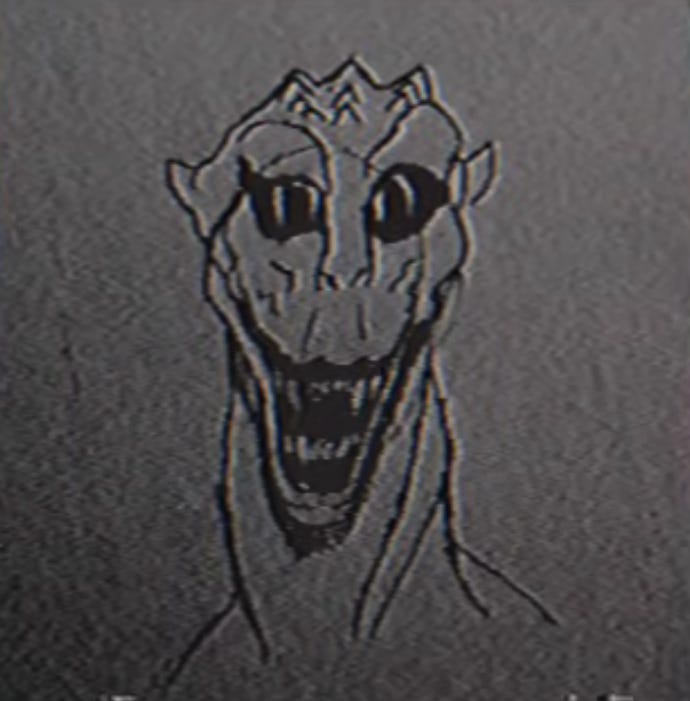
It seems as if the Suit Man became more of an urban myth than anything. Although there is certainly more evidence in this case, The Archive believes there is no reason to add to this case file.
Our point has been seen. Our point has been proven.
The Suit Man did not care about his personal suffering. Despite the physical ailments, he relished the power that Gojira gave him. He was not there to act in a film; he was there to act on injustice.
His escapade through Japan that night was to show people he existed.
He needed people to finally open their eyes.
He needed people to remember.
CONCLUSION
The Archive is closing this file.
We are not leaving it cold, but rather leaving it hot.
The Suit Man is still out there. His location is unknown.
While The Archive has leads on his coordinates, we will not be disclosing this information. He is exactly where he needs to be.
The Suit Man was a monster born from monsters. It is not the trauma that plagues him, but rather the lack of memory.
Does he even remember the color of his wife’s eyes anymore? Does he remember the sound of his children’s laughter?
Is the human side of him even still conscious?
Unfortunately, we have no answers for that.
But we do know one thing: history will always live on.
The Archive also acknowledges Haruo Nakajima, the original performer who brought Godzilla to life. What TOHO Studios and Haruo Nakajima did was not just give the world a movie, but give generations a kaiju that stood against the forces of our systems.
Godzilla is more than just a monster. And he is certainly more than just a suit.
ARCHIVE SUPPORT NOTICE
Due to recent events, The Archive has issued a request for support of AFSP. The Archive also wishes a swift recovery to Unknowingly. If you wish to donate, please see the button below:
We thank our colleagues at The Godzilla Papers for assisting us in this case file. Please subscribe to their organization’s page to receive important updates on any Kaiju events. It may just save your life.
As a member of the Godzilla Mission Arts Department so articulately described their love for Godzilla.
 | A guest post by
|