

The Horror of The Truman Show is Becoming a Reality
Are we all just living in a curated illusion?

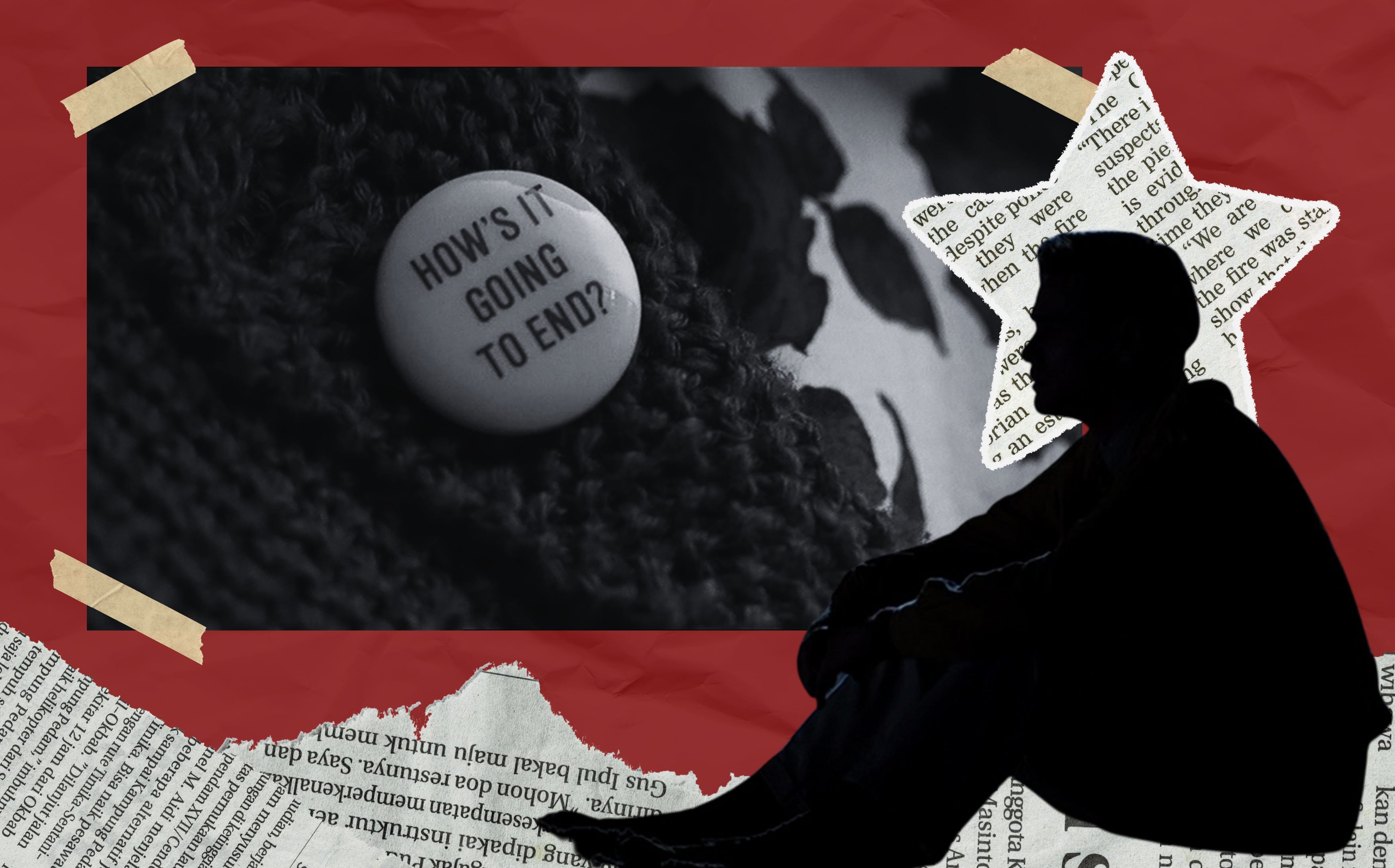
What’s scarier than a man being under constant surveillance? A man who is watched by the world, loved by all, yet with no real connections? A man in his own bubble, ignorant to the truth?
The Truman Show (1998) broke barriers in its unique plotline, making the audience face an uncomfortable concept that ultimately wanted you to think. It wasn’t a pretentious “this is deep”, but rather one that forced you to observe the world around you.
There is something deeply disturbing about the truths in The Truman Show. Perhaps it’s the unnerving understanding that it’s far too close to home in our current landscape. Perhaps it’s the concern on whether or not if we can even have a happy ending like Truman.
The difference between us and Truman is that we aren’t all on a giant set but instead place ourselves into the faux reality by choice. Each day we mindlessly scroll to inject our dopamine, with each minute distancing us from the material world around us. While we have a deep desire for change, the craving to break out of the illusion is seemingly louder than our want for freedom.
Or… is it?

Part One: The Pilot
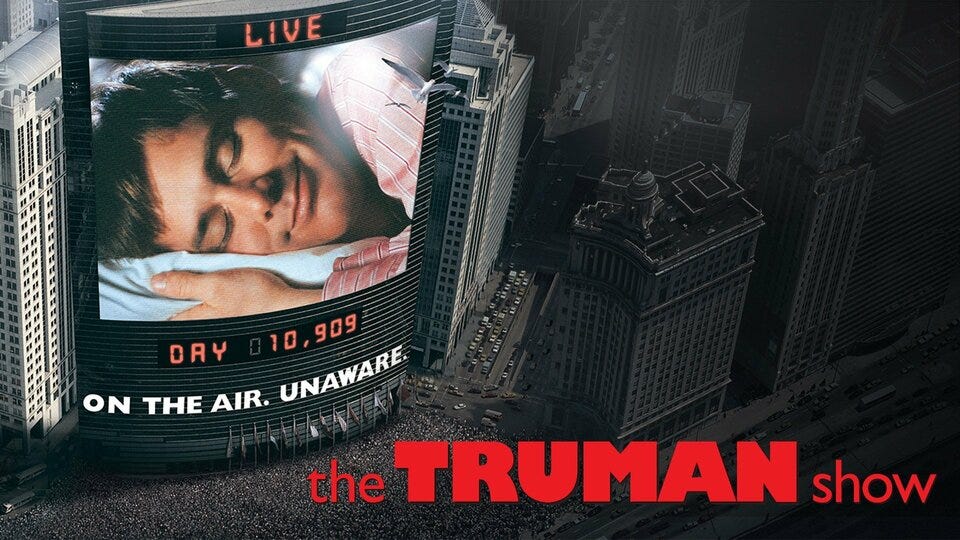
Every series starts with a pilot episode. From beloved sitcoms of the 80s to gritty dramas of now, each and every one of them had to go through the trials of the “set up.”
Stories had to be established, characters had to be introduced, and settings had to be made familiar.
The Truman Show was no different, although its origin story was obviously more unique than any other show before it. Its main star, Truman Burbank, isn’t just an actor playing a role… but rather a man who is unaware he’s even on a show.
Truman isn’t playing himself or starring in a reality show—he’s trapped inside a carefully curated world he believes is the real one. He was adopted by the studio as a baby, essentially becoming the world’s first 24-hour television star as an experiment.
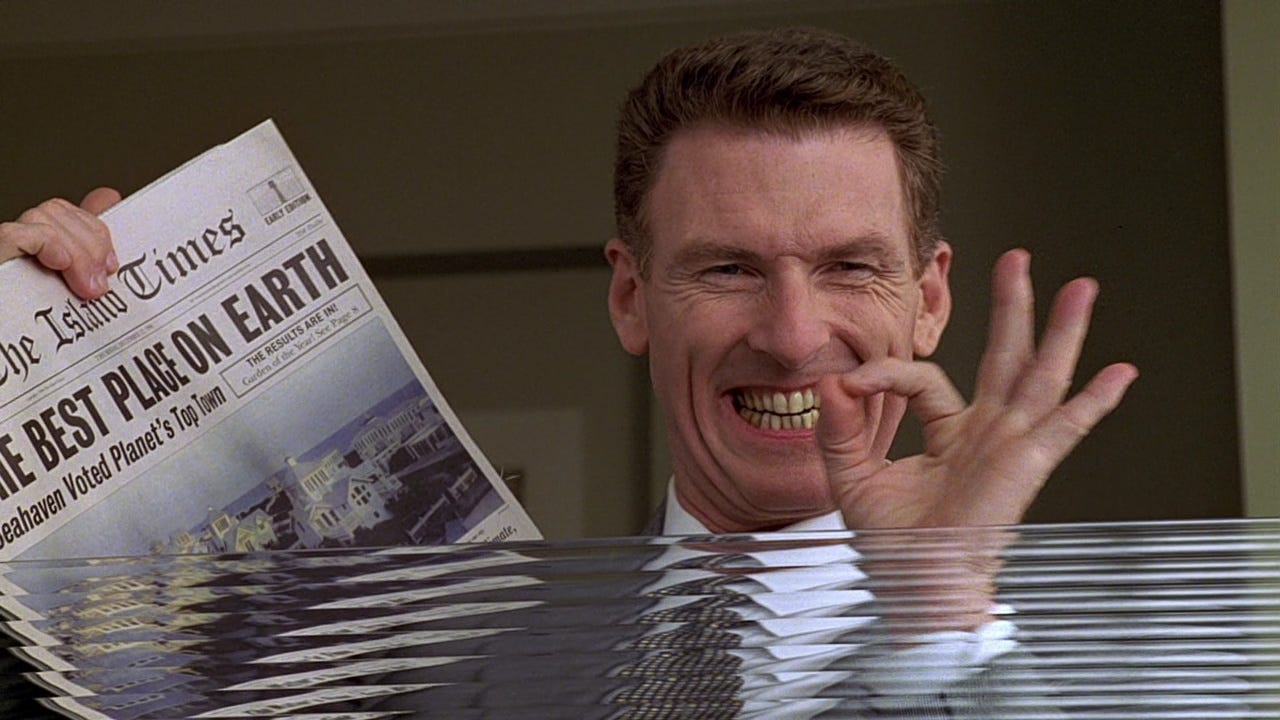
He is watched through every second of his life. The world became obsessed with him: witnessing his first steps, his first kiss, his first job; he was essentially the world’s kid, watching him grow since the womb.
And yet, Truman never consented to any of this. He never agreed to live his life through technicolor, but he lives blissfully ignorant. There’s something even more unsettling about the idea when we take a step back: Truman knew nothing of the outside world.
As millions were shocked by world tragedies and fear mongering, Truman was blissfully living in what one could call the happiest town on earth. He smiled while others sobbed themselves to sleep.
Regardless, The Truman Show was a breakthrough in entertainment. Not just entertainment—but the world.
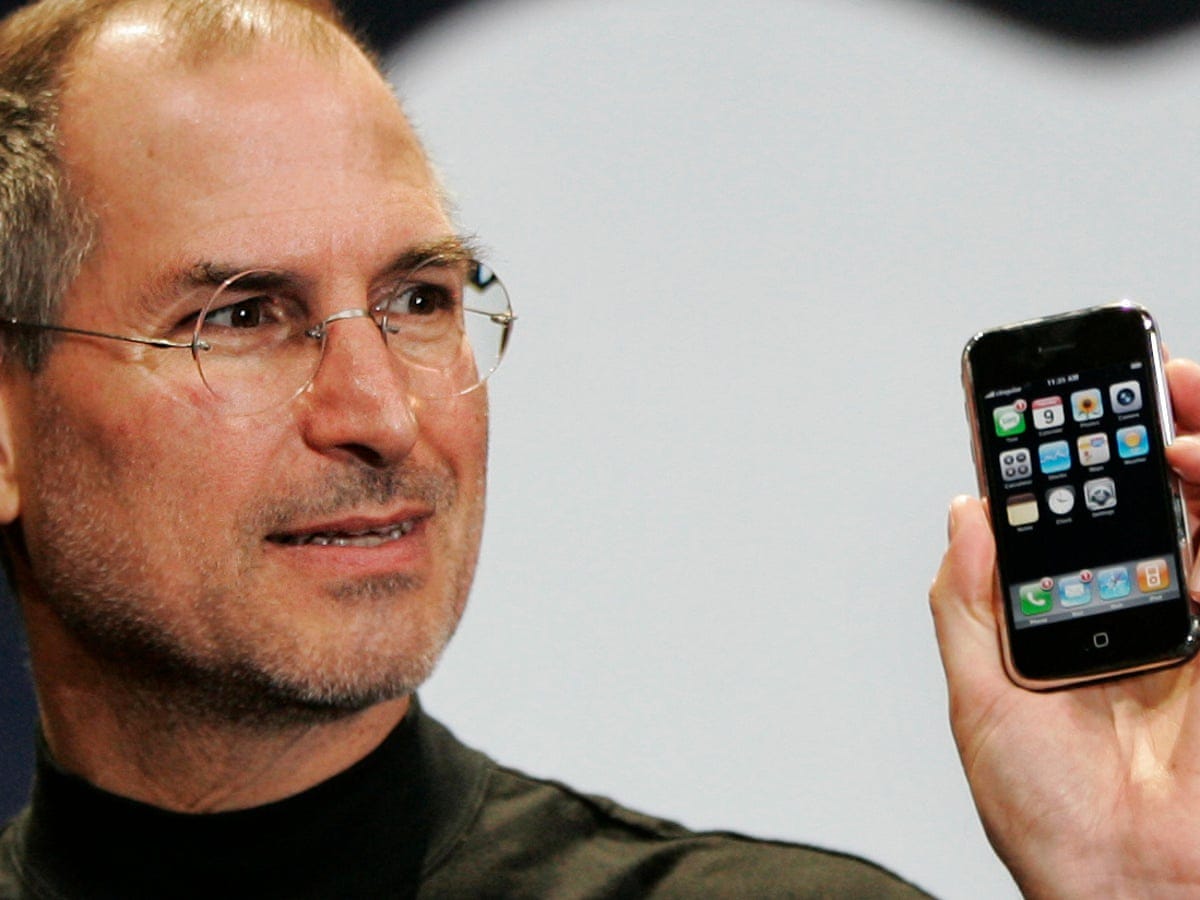
June, 2007. The first iPhone is released.
Although not the first smartphone, Apple revolutionized what it meant for a phone to be smart. No longer was it just about having a touchscreen interface or answering emails from anywhere, but entertainment.
Your phone could access the internet. There was an app for anything and everything.
And as the years flew by, the iPhone, and thus all smartphones, evolved into mini computers right in the palm of your hand. No longer was there an excuse to not know anything, because you could Google it at the blink of an eye.
And inside that computer held apps of connectivity. Social media flooded our homescreens, from Facebook to Instagram. If you weren’t tweeting you were snapping, and if you weren’t snapping you were updating your wall status.
Just like The Truman Show, the modern smartphone was designed to be a breakthrough in humanity.
It was meant to change every aspect of our lives. It was made to make us connect. It was made to make us laugh, cry, and cheer. It was made to be our perfect escape.
But the iPhone was just the pilot episode, retro TV icon and all.
Part Two: Filmed in Front of a Live Studio Audience
Truman longs for something more.
He feels trapped in his town and marriage, dreaming of travelling outside of Safe Haven and seeing the world. He wants to live a life with Sheryl, the first and only woman he ever fell in love with, who was taken off the show after she attempted to tell him the truth.
As these feelings grow deeper, strange occurrences begin to happen: stage lights fall from the sky, rain follows him, and the radio narrates his every move. He grows increasingly suspicious that something is wrong, yet all the actors continue to tell him he’s just imagining things and that everything is fine.
The studio wants to control Truman, of course, because the moment he breaks the illusion is when their money maker ends.
Similarly, don’t you want more too? Don’t you want to stop living your life on a screen?
We scroll when we wake up, we scroll when we use the bathroom, we scroll to the point of insomnia. We know it’s unhealthy to be on our phones all the time, yet it feels impossible to put them down.
People want more out of their lives than just what the internet has to offer, and that realization scares big tech companies just like Truman scared the director.
Our phones tell us that everything we need is right in our hands.
Why seek out community? You have social media. Why seek out school? You have Google. Why seek out art? You have AI.
Why do anything if you have it already. Why should you ever put down your phone? Why should you leave your house and get sunlight? Why should you ever think for yourself?
🇾🇴🇺 🇭🇦🇻🇪 🇪🇻🇪🇷🇾🇹🇭🇮🇳🇬.
🇾🇴🇺 🇭🇦🇻🇪 🇪🇻🇪🇷🇾🇹🇭🇮🇳🇬.
Ÿ̶͇͍͕͔͉̬́̂̆̄́͠͠ȏ̶̐͂̀͝ͅu̸̜̩̣̤̟͙̥̫̦̥͑̆̋͂̾̚̕͘͝ ̴͎̬̦͚̲͚̘̉͛̌̀̓̏͜͜͝h̷̛̘̫͊͒̅͒̐̈́̈͘͜͠a̶̡̡̺̰̼̯͍͔̝͌̒̄̓̕ͅv̷̢̛̛̩̣̲͐͛̓̅̔̅̂̕e̵̤̩̰̭͆ ̸̠̝̫͇̣̟͇̰̇͊́̑͐͊͌̄̿ȩ̵̛̭̰̦̎̏̉̈͌͂̚͜͠v̶̱̾̐̀e̷̳̻̰̟̎̏̀̚͝r̸̨͙͖̦̫̦̊̉̑̓͛̉͝ͅỳ̶̡̞̟̗͖̖̥̦̜̓̽̆̿͊̈́̕ţ̴̭̬͙͇̑ḩ̴̱̲͙̇ḯ̸̧̦̗̯͎̹͚̲̱̾̊̆̓̑̒̒n̴͓̘̰̻̲͐̾̅̽͝g̷͎̹̊̆́̑.̷̡̩̗̙̈́͛̌̾̽̎̄̓̔
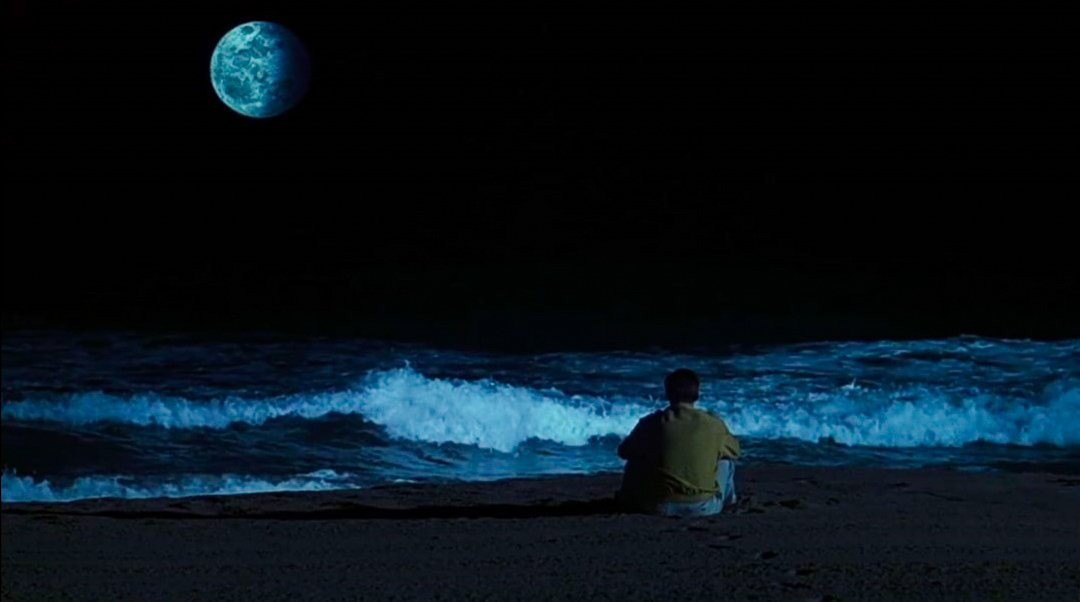
Why must Truman long for something he doesn’t need? Why yearn for something you already have?
Safe Haven is perfect. Our reality is perfect.
The director has us in good hands.
Part Three: The Laugh Track
As Truman grows more suspicious of his surroundings, his attempts of fleeing Safe Haven only get stronger. Each attempt is met with extreme precautions from the production crew.
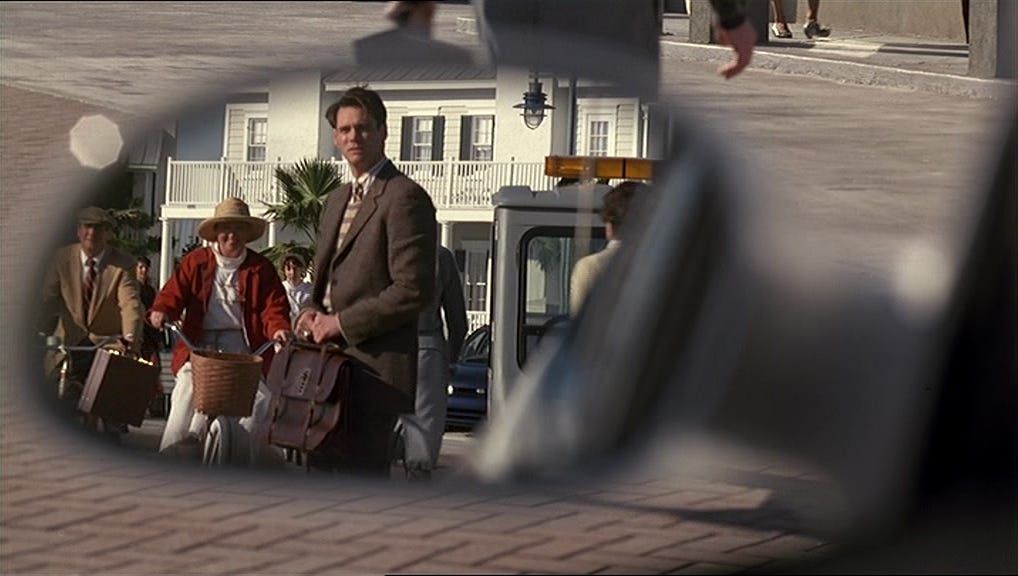
The actors simply trick him into believing that they’re on his side, trying to make sure he understands that the outside world is far more dangerous than he knows. Of course, we know that’s just a lame attempt to scare him away from ending their paychecks.
Everybody involved with The Truman Show benefits from Truman being trapped and manipulated except for Truman himself. At the end of their workday, they get to take off the character and go home. Truman never gets that luxury, because he doesn’t even understand the concept of that.
But the more Truman grows unhappy, the more his will to leave the world he’s imprisoned in strengthens. He fails only to get back up again, and again, and again, and again. He knows he has to leave, because there’s no other option if he doesn’t.
We don’t have any other option but to keep trying.
As Truman begins to suspect his peers, so do we as we look at these big tech companies.
They’ve become untrustworthy to us, pushing algorithms in our faces and placing ads on our fridges. The more we consume, the less we live.
Like a laugh track cued to make us think something is funny, these algorithms are meant to make us feel seen. Our desires, insecurities, and loneliness are used as data to show us the best targeted ad.
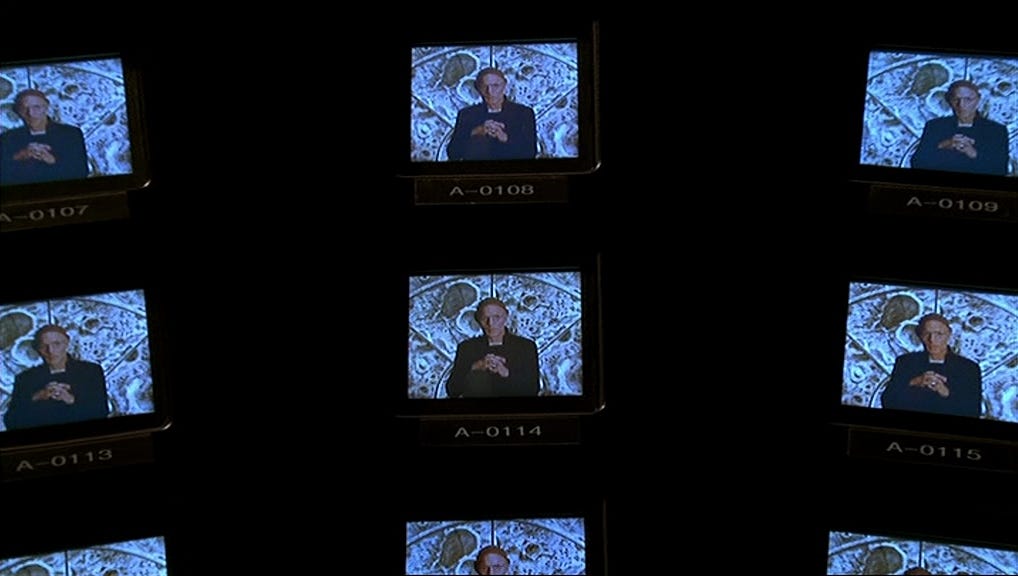
The once legendary breakthrough in history has now become nothing but a powerful salesman, keeping us addicted to the next scroll not unsimilar to a suffering drug addict fiending for the next high. Our abuse of choice has become blue light.
We speak it and they listen to it. We think it and they sell it.
As more news comes out surrounding these companies’ shady business practices, the more we begin to look at them sideways. Suddenly, the greed is more visible, if only because of how obvious it is.
If Truman’s awakening was a giant light falling from the sky, ours was the subscription to live.
You want to print from the printer you bought? You need a subscription. You want heated seats in your luxury vehicle? You need a subscription. Want to use your ridiculously expensive alarm clock? You need a subscription.
You don’t own anything. There’s no need to own anything anyway, you silly!
Besides, what’s the point in needing any of that if you’re supposed to be watching your screen all day? Did you forget that you’re supposed to be ᴀꜱʟᴇᴇᴘ?
Yet, we continue to look at tips on how to limit our screen time. We set timers on our apps. We put our phones in another room. We mediate, exercise, and go for walks. We try to not think about it, only to track our screen-free progress onto our Notes app for later.
Part Four: The Finale
Truman survives.
He reaches the end of the soundstage and finds a staircase that leads to an exit.
The director, over an intercom, tells Truman the truth about the show. He says: “There's no more truth out there than there is in the world I created for you. The same lies. The same deceit. But in my world, you have nothing to fear.”
A plea from a panicked man, though hidden under a calm exterior.
Truman listens, allows the director to make his case, and then turns to the camera.
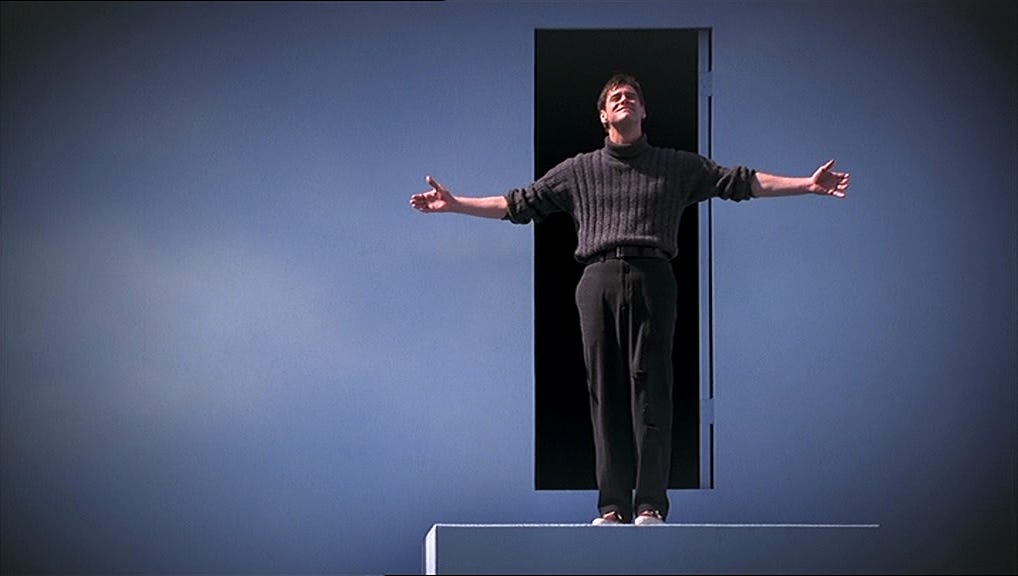
“In case I don't see you--good afternoon, good evening and good night,” he says, bowing to his audience before walking through the exit.
On the surface, this is the happy ending. For us, anyway.
There’s a desperate need to be like Truman now; to keep putting the phone down, to stop paying for subscriptions, to do something to make someone—anyone—listen.
We, too, want to take our bow and finally leave the stage.
People can hear the cries from corporations all day begging for customers to stay. A small trend has started to drown out those tears though: the analog movement.
More and more people are adopting “dumb” tech in favor of their smartphones—flip phones, digital & film cameras, DVD players, etc. People are clinging on to the aspect of owning something and having control of something again. People are taking breaks from the internet.
Finally, hobbies seem to be making a comeback (an odd sentence to even type out). People are reading again, making art, crocheting… people are being creative… people are being people again.
We have to be the change we want to see. Nothing changes if nothing changes.
While we can point fingers and certainly make corporations take blame in their schemes, we also have to take initiative to stop scrolling. We have to stop letting them rot our brains before it’s too late.
Our brains—your brain—is meant for so much more.
You are here with purpose. You are here with love.
You are not here to watch 100 TikToks in one hour.
For social media (yes, even the ones we love), you are the product. Your time and data is their most valuable asset. Your entrapment is their money.
Take the director’s seat.
Best movie ever!