

The Price of Fame & Fortune
How Late Night with the Devil warns us against fame

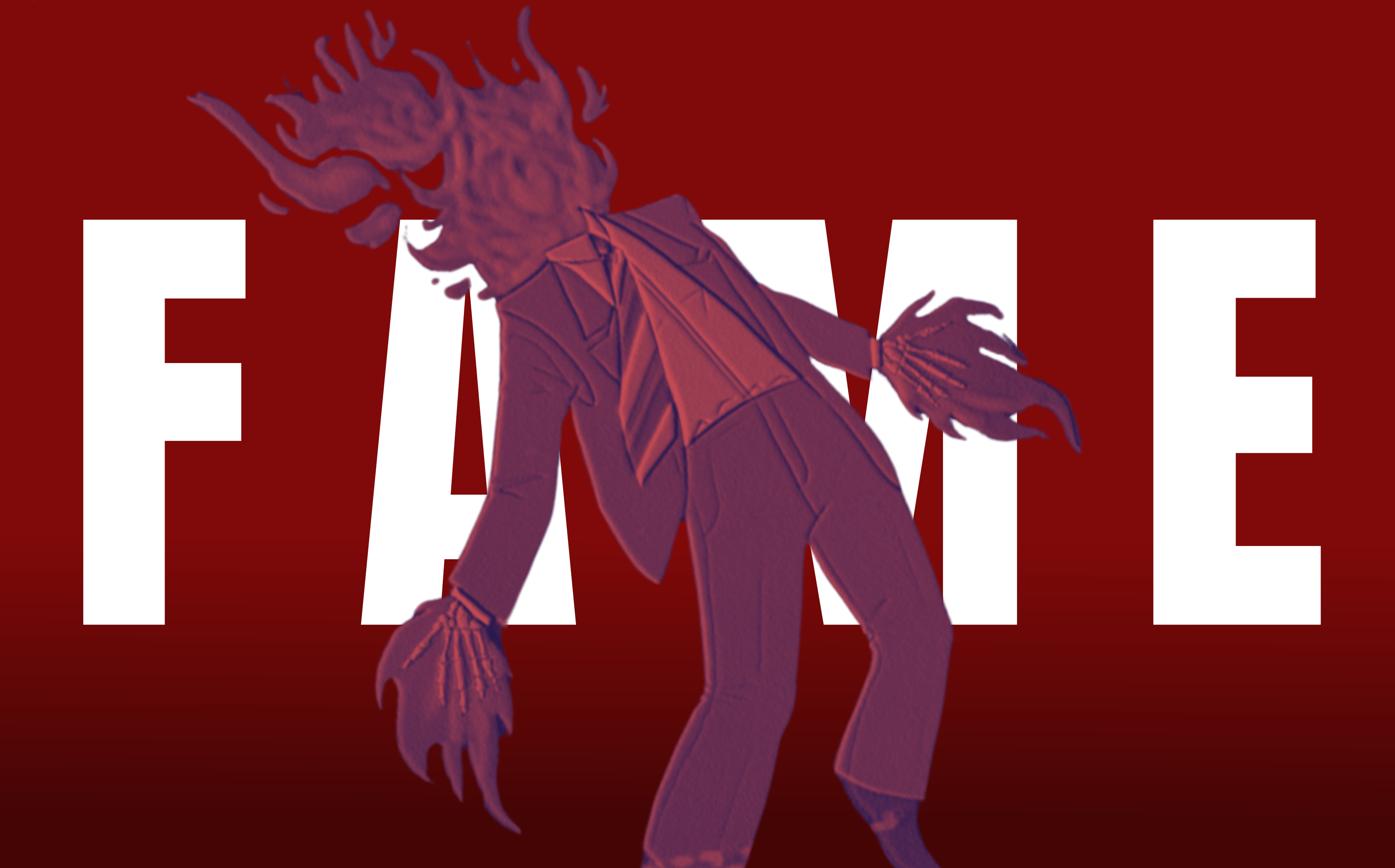
How far would you go for fame and fortune? Are you desperate enough to do the unimaginable?
Throughout history, there’s been myths and legends about the desperation people have for fame. Robert Johnson, one of the most famous of these legends, is said to have sold his soul to the devil in exchange for mastering the blues. This story has only grew throughout the decades, with many celebrities being accused of selling their soul for their fortune.
On the more rational side of things, the concept of trading your morals to get ahead isn’t anything new. White lies and fake friendliness is actually quite common in spaces like the corporate world, and to some people, doing one “bad” thing is worth it if it means they’ll get ahead. But are your morals really negotiable? Is “evil” worth the fame and money?
Late Night with the Devil takes these questions and gives us the answers, warning us against the corruption that the desire of fame can cause. Jack Delroy is the Robert Johnson of the film, and his irrational craving for success leads him into a downward spiral of insanity.

Elitism in the Shadows
What would you for fame? This is the neverending question that haunts Jack Delroy throughout Late Night with the Devil.
In the beginning of the film, we’re given context about Jack. A documentary-style opening provides his backstory, with important details such as his membership with “The Grove” and his wife’s untimely passing due to cancer. We learn that Jack is the host of a popular talk show called Night Owls, but because of his wife’s death, Night Owls stops production until Jack is ready to come back.
When he finally returns, ratings for the show need to be revived, and he plans on the Halloween special to do the trick. After all, the guests are quite the spectacle: a psychic, a possessed girl, and a paranormal skeptic.
But what about The Grove?
The Grove is more than just an elite club for gentlemen. It’s actually based on the controversial Bohemian Grove, a real club in California. It’s said to be where the elites meet and perform rituals… or at least that’s what people believe anyway, considering how secretive the location is.
There’s very limited footage of the club. One during a ceremony, which was surprisingly captured by Alex Jones. That alone is… kinda creepy, admittedly. There was the videos by dancer 1 on YouTube, although some have since been taken down.
Either way, the things found on Bohemian Grove’s property are weird, and have only fueled conspiracies surrounding the place.
Which, yes, Night Owls isn’t just a silly play on words. There’s owl imagery for a reason.
Jack’s involvement with The Grove in the beginning of the film foreshadows the truth of everything, alluding to him having much darker intentions.
The Demon Problem
Night Owls banked on boosting views with Lily, the girl who survived a mass suicide by a Satanic church. Since then, she’s been possessed by a demon, and her possession is Jack’s ticket to success again.
Who wouldn’t want to see a demon on live TV? Could Johnny Carson ever beat that?
Jack doesn’t exactly treat the possession as seriously as he should though. Not only is he already potentially putting his guests in danger by having a demon on set, he also glorifies the entity as the show goes on. He begs for Lily to let out the demon, against June’s wishes (Lily’s caretaker), for his own selfish wants.
When Lily agrees to this, she’s strapped to a chair and told to let the demon speak. June is careful with conjuring the entity, if only for Lily’s sake, but knows the dangers of what could happen.
Painfully, Lily lets out the demon, and Jack’s negligence only comes back to bite him in the ass. Why? Because the demon says it remembers Jack.
They met under the tall trees, the demon says, claiming that Jack wanted his wife out of the way for June.
Things do eventually calm, with the skeptic trying to claim Lily and June’s antics as nothing but mass hypnosis. It isn’t until later on that Lily becomes possessed again, with her head splitting open to reveal the demon’s glow. While the demon brutally kills guests, Jack is taken to a twisted version of the set.
His sanity begins to deteriorate as he relives past skits, and the truth reveals itself.
The Sacrifice
Success usually comes with sacrifice. That’s normal. Every successful person has had to sacrifice something to get where they are.
Napoleon Hill, the author of Think and Grow Rich, is quoted as saying the following:
“Great achievement is usually born of great sacrifice, and is never the result of selfishness.”
But what about the people who only seek the fame and fortune? Those who do seek success out of selfishness?
This is the question that Late Night with the Devil poses, as Jack Delroy’s sacrifice proves to be more than just losing some personal time.

When Christou, the show’s first guest of the evening, arrives on stage to perform his psychic abilities, he senses a strong energy named “Minnie.” An energy that Jack later recognizes as what he believes as his late wife.
As the film progresses, Jack continues to sees his dead wife, even believing he sees her apparition on tape at one point. At first, this seems like a lovely reunion of man and wife, with Madeleine checking up on Jack. However, we soon learn the truth of the situation.
While it was true Madeleine had cancer, it wasn’t the cancer that killed her. No, no, it wasn’t that at all.
Jack had met the demon before, in The Grove, after making a pact with the Devil. He sacrificed his wife’s soul in exchange for his show to be successful.
What Jack kept feeling during the recording of the show was guilt, which rapidly built up in each new segment. His wife wasn’t there for reunions, his wife was there to remind him the evil he had committed. She haunts him, wanting him to feel the pain she had before her last dying moments.
So much so, that he’s forced to relive a version of the ceremony he was part of at the The Grove. His dying wife lays on their bed, begging for him to put her out of her misery. Jack’s guilt, now too much to handle, moves him to tears. He begins to feel remorseful over what he had done, but eventually stabs her so she may be released.
But it wasn’t his wife he stabbed.
When he snaps out of it, he sees he had stabbed Lily, and that he stands among the others who were killed in the incident. As the camera pans out, we hear police sirens in the distance, and we can only assume that Jack will meet his demise.
The Unexplained Episode
Late Night with the Devil is a delightful possession film, filled with eerie moments and retro special effects. The question it poses to the audience, however, is possibly the scariest part of it all: What are you willing to do for fame?
Jack Delroy represents the darkest desires of those who want success. He does everything in his power to make sure he achieves fame, even if that means risking the lives of others. Bring a demon on set, how bad could it possibly be? Let the demon out, it’ll spike our ratings. Take my wife’s soul, it’ll be worth it.
Jack’s guilt eats away at his brain the entire film, remorseful over the things had done to get to the top. As the say, the top is lonely.
His actions led to a successful career, yes, but his life became meaningless in everything else. He killed the woman who loved him, sacrificed her without thinking twice, and was left in isolation. The emotional turmoil he went through… was it really worth it? The murders of all those people on set… was it really worth it?
Was anything he did worth it?
That’s the question that echoes in the end credits of the film, and that’s certainly how it felt when I watched it in theaters. As the credits rolled, the darkness of the theater felt like an extension of the movie. Was anything that Jack did worth it? In the end, his mind was gone, his guilt consumed him, and he was going to be arrested.
The sacrifice that he thought would make him so successful only backfired on him. Jack’s soul was already gone before he made the deal with the Devil, that’s why he gave up his wife’s.