

Worship the Bunny
How Murder House dissects Easter consumerism

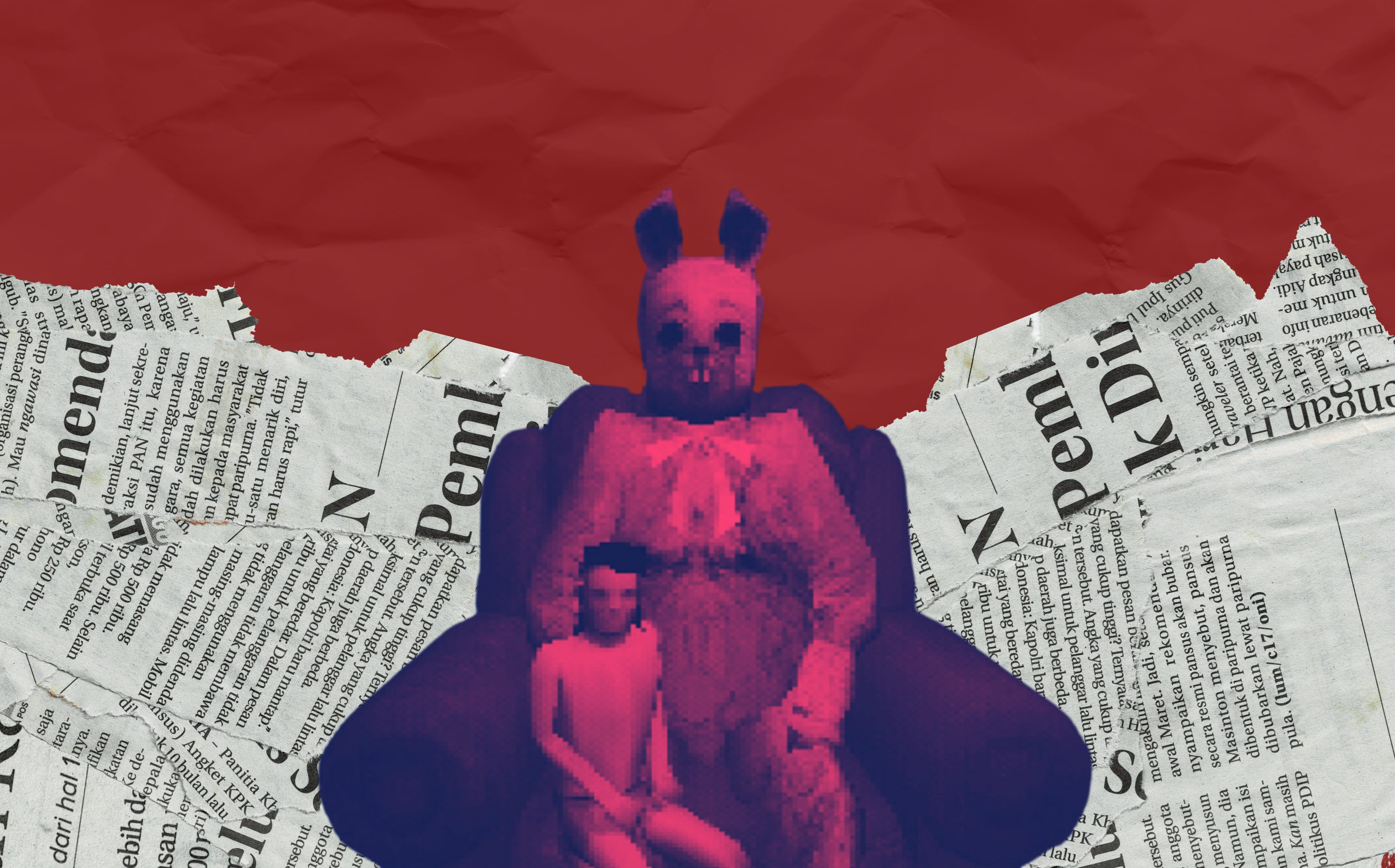
Easter is a day of love, rebirth, and gratitude.
It’s a day we take a step back and reconnect with ourselves spiritually, reflecting on the beauty of Spring in the most grounding way possible… or, at least, it’s meant to be.
The reality is that Easter—like Christmas—has been hijacked by corporations, contorting it into a hyper-consumerist holiday. Instead of a small Easter egg hunt at a local church with a modest chocolate basket from the Easter Bunny, children now receive giant baskets overflowing with expensive, over-the-top presents.
The 2020 game Murder House unexpectedly tackles this commercialized version of Easter through a grainy, PS1-style survival slasher.
You have one objective: survive the Easter Bunny.

Egg Hunt from Hell.
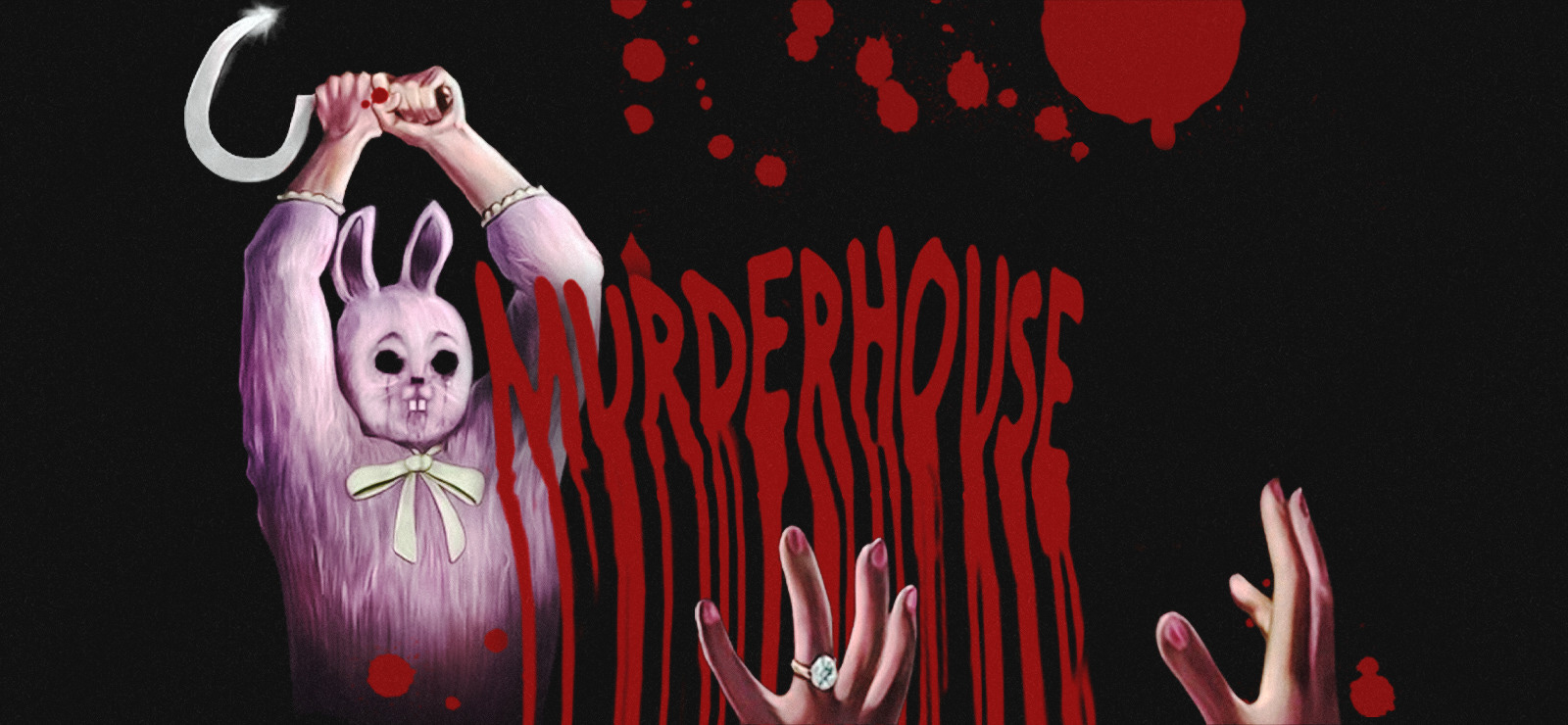
Murder House is developed by iconic indie horror studio Puppet Combo, who specializes in PS1-style horror games with VHS flair. Their Easter entry is no different, with the game’s main antagonist being The Easter Ripper, aka Anthony Smith.
When a TV news crew arrives at Smith’s abandoned home to film a documentary about the child killer, they begin to get picked off one by one. The narrative follows the classic 1980s direct-to-video slasher beats, beautifully replicating the media into an interactive format.
From the jump, the game criticize the over-commercialization of Easter with its opening scene. It opens with a photographer urging a child to sit in the lap of a mall Easter Bunny. The child hesitates. The bunny costume is joyless—unlike most Easter Bunny costumes, this one seems uncanny… like it isn’t supposed to exist.
But that’s exactly what many would argue anyway, isn’t it? The Easter Bunny may have originated from German folklore, but it has since been bastardized by the greedy corporations of modern day. No longer a mythical figure judging the children’s behavior during spring, the bunny is now just another mascot of corporate greed—an anthropomorphic Santa in pastels.
We have forced him into a cartoon: a giant bowtie, a nice suit jacket, buck-toothed smiles. The soul is gone, and the only thing left is the plastic eggs underneath… ready to sell mall photographs and seasonal Peeps.
And on top of all of this, Murder House’s plot is about a TV news crew. They quite literally invade the former space of a child serial killer to film a documentary. They show no respect for the victims, as they make it into a cheap ghost story for entertainment value.
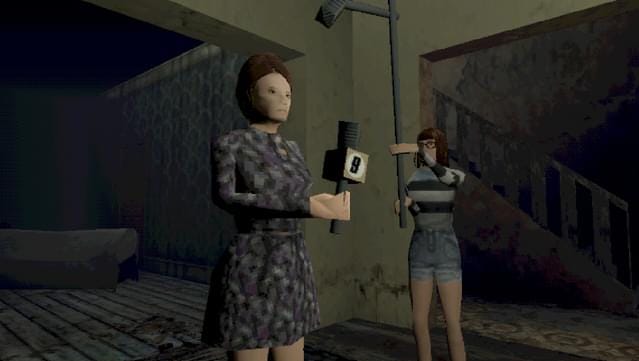
They use the house—a place where innocent children were tortured—as a backdrop for their faux ghost story. One crew member is made to dress in white bed sheets, pretending the house of real-life horror is nothing more than another episode of Ghost Hunters.
“We’re putting people to sleep here with this boring story. Time to sex this up.” - Gary
The crew represents the corporate makeup of the holiday, painting the bunny with pastel foundation and gluing falsies on to look presentable.
Empty Plastic Eggs
Despite the promises of joy and renewal, horror sees the emptiness of the modern Easter holiday.
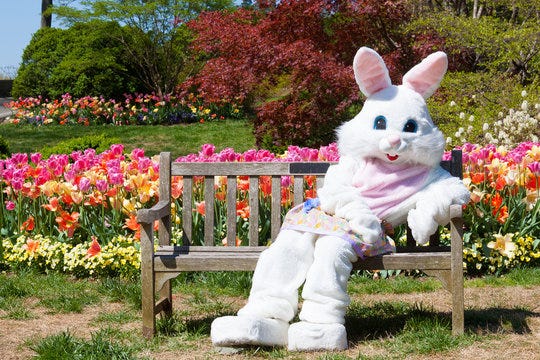
No longer is the holiday about religion, spirituality, or even German folklore bunnies… but rather about mass-produced plastic. You need more sugar. You need more eggs. You need more decorations. More clothes. You need more.
Your average Marshalls or T.J. Maxx will be slammed full of cheap Easter decor, seducing you into buying a cute bunny statue you’ll only have on display for a month. Target will entice you with limited-time treats, whispering “just one more” into your cart. Social media will force you into jealousy and shame, with influencers shoving their giant baskets they made for their children down your throats—and guess what? You’re a terrible parent for only getting your child a chocolate bunny.
That is what these mega-giants do: they break you down into buying more and more. You become their consumerist slave. The once beautifully fun traditions of Easter—egg hunting, little baskets, dyeing eggs—become symbols of hollowness in modern day.
Can you afford those eggs? Can you even afford a ham for Easter dinner?
No?
You put it on your credit card anyway.
You become a worshipper of the Easter Bunny, and the family traditions fade into the background…
The Easter Bunny is now a figurehead, a mascot made to be family-friendly. He is meant to be smiling, joyful, and trustworthy, but the reality is that he is none of those things. Mascots have no identity—just an agenda.
That is why the Easter Bunny costume in Murder House is so significant: he isn’t just uncanny for the sake of horror, he is uncanny because he reflects the truth of modern Easter.
Eggsistential Crisis
Not all rebirths are holy.
The rebranding of Easter by mega-corporations has left behind a weird and empty feeling for a holiday that is supposed to mean something. Instead, everything feels off. Easter feels… empty, yet the baskets remain filled with candy and toys.
Murder House is able to capture the strange, unnerving feeling of what it’s like to be trapped in an overly consumerist-first holiday.
It’s no longer about love, spirituality, or family.
It’s about the Easter Bunny.
It’s about the chocolate.
It’s about the toys.
It’s about how much you can one-up the next person.
You can’t buy a soul in the candy aisle… but you can lose your life in one.
Will have to add Murder House to my watchlist
Random compliment, but you always make very good thumbnails. You give them a look that I immediately recognize as yours before I even spot the name. In sales talk it would be called "branding," but to me it's just well-stylized. Just wanted to share.