

Our society relies on escapism.
The Archive doesn’t have to conduct any research on this statement. The average American spends over seven hours per day on a screen, whether that be on their smartphone or on a computer isn’t what’s important. What is, though, is that over 43% of their waking life is based on said screens.
And that is just one aspect of escapism, isn’t it? Entertainment doesn’t just exist in the form of a screen. There are also novels, comics, and tabletop games that orbit our escapism culture as well.
The American life is dependent on escapism. Without entertainment to keep sane, citizens would undoubtedly become restless. Not in the traditional sense, but rather in an angry mob sense.
On average, the typical American is working over eight hours per day. The typical American has about four waking hours to themselves. The typical American is exhausted after slaving away at the corporation that provides them with little money.
And thus, the typical American relies on any form of entertainment to keep them feeling mentally sound instead of breaking down daily.
Perhaps then, that is why fandom culture has become so increasingly intense in recent years.
People are lonelier than ever, suffering from lack of community due to the long working hours and insufficient funds. In turn, people find comfort in media.
Isolation leads to the befriending of fictional characters. Novels become biographies. Films become documentaries. Television shows become docuseries. Video games become portals.
Suddenly these characters are not just fictional beings to people, but rather real living individuals who people can connect to. And while there’s nothing wrong with connecting to a character or seeing oneself in a story, the unhealthy parasocial nature that many people have begun to show in the last few years is concerning.
People are not just embracing fiction; they are becoming it.
And so, that leads us to the most interesting instance of this phenomenon: The Annie Wilkes Case.
The Archive warns our readers that this case is disturbing. This file may not be suitable for everyone, but it has been made public for educational purposes.

PART I: To Escape Loneliness
The one thing we cannot medically cure is loneliness.
Despite how much we attempt it, the human brain craves real and genuine socialization. Fiction can supplement this, but it cannot replace it.
It’s comparable to a vitamin D capsule aiding us. It will supplement our need, but it can never replace the sun. The benefits from sunshine stem from far more than just the vitamin. There are complexities hidden within the rays, sinking into our bloodstream like a spiritual elixir.
But people can’t reach the sunshine.
As long as the temptations of the dollar hang above the heads of the greedy, they will continue to block the light.
And so, what does one do when they can no longer go outside?
They create their own light.
And that is where this case begins. When Paul Sheldon wrote the proclaimed Misery series, he was not expecting it to become so popular. More so, he was not expecting his work to be tied down to the all-consuming nature of the romance novel community.
This was during a time when romance novels dominated the scene. Fabio was on practically every cover. Books could be picked up at the magazine shelf in the local grocery store. Women—especially homemakers—needed entertainment, and that’s exactly what these novels provided.
So, when the first installment of Misery exploded in popularity, Sheldon had no choice but to continue his Victorian masterpiece.
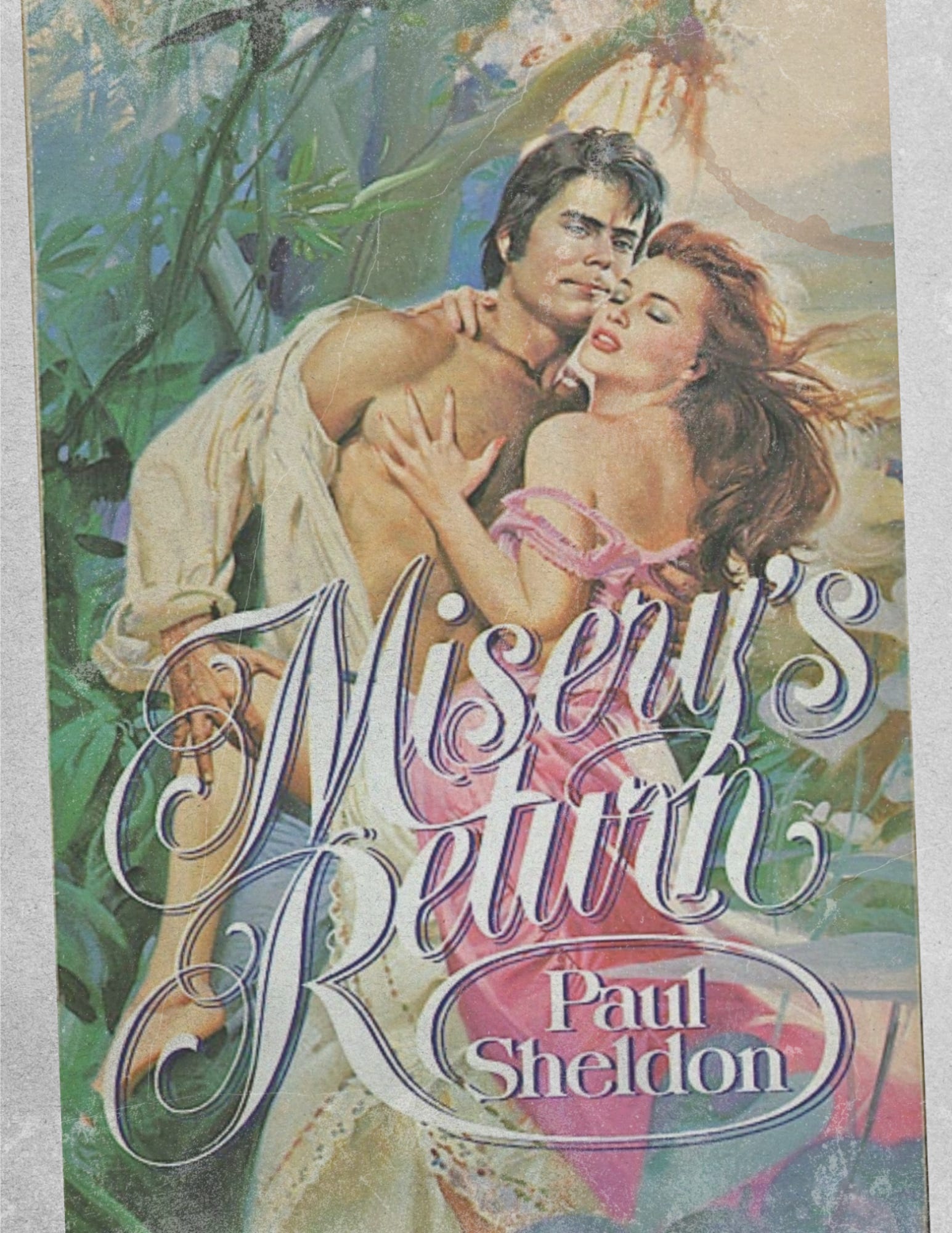
Considering Sheldon’s history of being twice divorced, The Archive theorizes these novels were first written out of comfort rather than fame-chasing. The name of the titular character is evidence enough to support this theory, although it has never been confirmed. What has been confirmed, however, is that Sheldon eventually grew tired of writing this genre.
This is no surprise, as the dime-store romance genre was an easy market to find success in, but a hard one to get out of. Sheldon, as evidenced from his many interviews on this case, said he was ready to move on to bigger and better ventures with his authorship.
The last installment of the series, Misery’s Child, ends with Misery dying from childbirth. She was killed to symbolize Sheldon’s escape from romance, although in being the writer he is, subconsciously made this death a poetic way of rebirthing his own writing career.
Sheldon knew fans wouldn’t be pleased with this ending. But he was.
That’s all that mattered.
In fact, he began writing a new novel called Fast Cars. While it was never released due to it being lost, it was said to have been a more gritty and action-based novel. A far cry from his romance beginnings.
It was on the day that he completed writing Fast Cars that he wrecked his car into a snowbank, breaking both his legs from the impact.
It was on that day he was rescued and given aid.
It was on that day he met Annie Wilkes.
Coincidentally, Wilkes was a major fan of Sheldon. She loved the entirety of the Misery series, and by the time of their meeting, was about to start reading Misery’s Child.
Wilkes would frequently give Sheldon codeine-based pain pills, which caused him to drift in and out of consciousness. Sheldon could only recall a handful of memories at this point of their relationship:
Annie Wilkes snooped through Paul Sheldon’s things. She hated the profanity in Fast Cars.
Annie Wilkes had a pig named Misery.
Annie Wilkes had mood swings. She often smashed items against the wall. She was also a pathological liar.
Annie Wilkes finished Misery’s Child. She loathed it.
Annie Wilkes locked Paul Sheldon in a room without food, water, or pain medicine as a means of punishment.
This is where things begin to change, as Sheldon was forced into becoming much more alert as their relationship lingered.
But why was Annie Wilkes so obsessed with Misery?
The site of the car crash was in a remote area of Colorado. Wilkes’ cabin was isolated from any neighbors.
Therefore, Wilkes was often lonely. On top of this, she has been theorized to have suffered from mental illness from many experts.
A recipe for delusion and obsession, Annie Wilkes was the perfect candidate to be a parasocial fan.
PART II: You Work for Me
Scouring the many interviews Paul Sheldon has done in regards to this case, reports have varied. The Archive doesn’t believe that Sheldon is making anything up, but rather that the severe PTSD from this event has permanently altered his version of the truth.
While The Archive attempted to get a comment from Sheldon or his publisher, we were unsuccessful in getting any type of clarity. Therefore, we are left in piecing together the puzzle.
However, Annie Wilkes’ history is far easier to uncover and confirm.
Local newspapers reported on Wilkes far before this case became mainstream. In fact, Wilkes kept a scrapbook of the many newspaper clippings in her honor, seemingly hoarding the memories of her death trail.
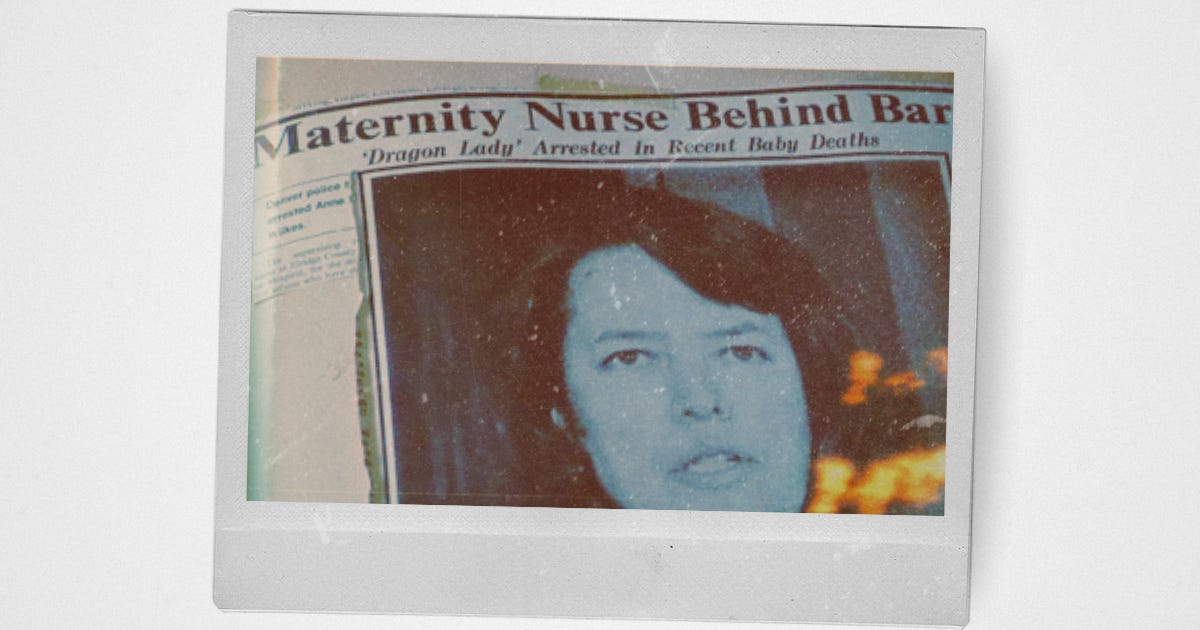
Before coming in to contact with Sheldon, Wilkes had murdered numerous people. She began her killing spree at the age of 11, ironically making her way into a nursing career. During her time as the head nurse in a maternity ward, she killed multiple infants.
At the time, her case was acquitted for lack of evidence, but the scrapbook forced authorities to acknowledge she participated in infanticide.
Despite its infamy, the scrapbook ultimately helped authorities solve numerous cases. Wilkes had murdered her neighbors, her father, and multiple patients under her care. It is rumored she killed over 70 people.
This behavior didn’t leave her just because she was a fan of Sheldon, though.
After finding out Sheldon had killed off Misery, Wilkes became enraged over the decision. She had seemingly treated Misery as a real companion. Admittedly, The Archive must point out that Annie Wilkes most likely used Misery as a fictional stand-in for a friend.
And that is where this case truly begins.
Sheldon explained that after Wilkes read Misery’s Child, she forced him to write a new book to bring her back. Sheldon recalled that novel being named Misery’s Return.
In interviews, he often explains that Wilkes forced him to write on a typewriter that was missing the “N” key, and that the novel had to be dedicated to her since she saved him from the car wreck.
His first attempt of writing the novel was dismissed by Wilkes. He often explained how she called it cheap, forcing him into a second attempt.
Surprisingly, Sheldon remembers the experience he had while writing this novel the most vividly. He could recall the rough feeling of the keys, the rapid momentum of the story, and the strange creative burst that came out of him during this time. It was not Annie Wilkes that inspired him, but rather the danger of the situation that caused his coping mechanism to save his sanity.
It is a parallel to the same situation we see time and time again. Fans put artists into a pigeonhole, refusing to let them evolve. Instead, there is a demand of what is familiar, as loneliness ultimately craves what is comfortable.
“No, you can’t let this character die.” “I hate you for making them break up.” “I will never forgive you for that ending.” “Your work used to be better.”
Musical artists experiment as their lives evolve, but fans cannot accept the change. Writers expand their genres to try new things, but fans cannot accept the change. Artists dive into their own drawing style, but fans cannot accept the change.
The art is their comfort, and the artist must meet their demands.
PART III: You Owe it to Us
Ultimately, fame comes from the fans.
There is no argument there.
A celebrity becomes famous because people enjoy their work, propping it up for the world to see. Without their fans, they would not be known.
But they would still be artists.
Even with no audience, writers still write. Singers still sing. Painters still paint. Musicians still play instruments.
As much as people hate to admit it, artists do not create for others. The first person an artist creates for is themselves. Everybody else is just a happy accident.
And yet, toxicity radiates from fandom circles, telling them that there is no personal choice. An artist must follow what the fans say.
An artist owes the fans.
It is no surprise that Annie Wilkes believed this too. She was so in love and obsessed with Paul Sheldon that she refused to let him go.
As Sheldon puts it, Wilkes was far too willing to die with him rather than live without him.
And so, that is when Wilkes forced Sheldon to stay.
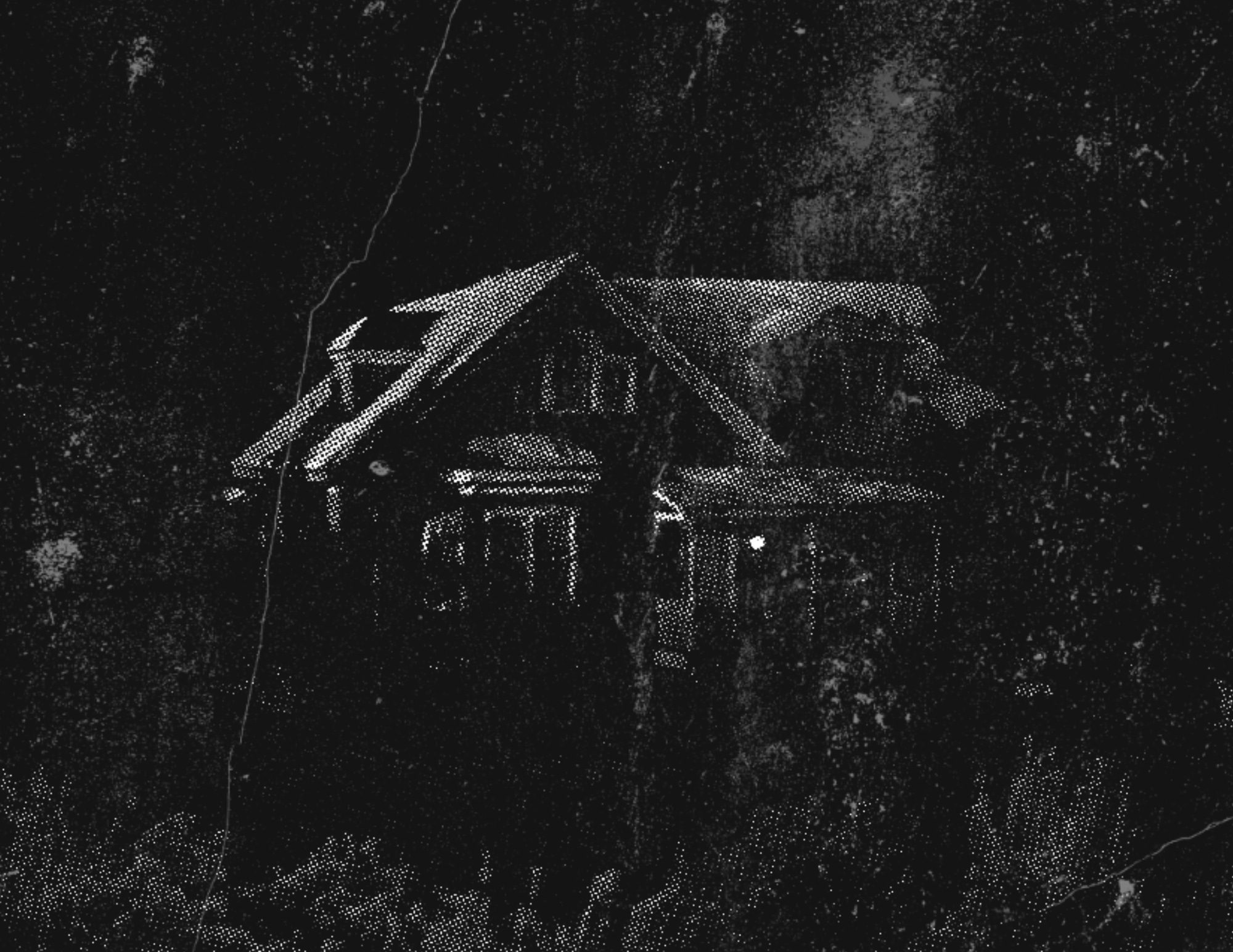
Sheldon recalls being drugged and strapped to the bed. When he woke up, Wilkes was explaining what happened to thieving miners in the diamond mines of South Africa. Hobbling, she called it, a punishment that would keep Sheldon from ever leaving her.
Urban myths of Wilkes said she had an axe.
The reality is that she had a sledgehammer.
She didn’t cut his foot off. She beat his ankles in.
And yet, all of this pain and misery to finish the book led to a violent celebration. Wilkes did not read the completed manuscript of Misery’s Return.
Sheldon was never going to let her.
From The Archive’s research, Sheldon recounted burning the manuscript in front of her.
He shoved the burning pages down her throat.
He killed her with a pig door stopper.
He killed Annie Wilkes.
He killed Misery.
Conclusion
Annie Wilkes is dead.
Paul Sheldon lives with the trauma.
Fandom culture has become a fascinating case study on human behavior. There are many who are able to find their community, respectfully bonding over their favorite art.
Others become obsessive. They don’t consume the art but rather they let it control their lives. The artist is no longer a creator of joy, but rather a target that must be fixed.
Death threats are made over fictional characters.
Personal imagination is threatened because the artist did what they wanted and not what the fan thought was right.
Suddenly, art is neglected. It is resented. It is seen as something dangerous and harsh.
But even in a dark room, The Archive wants to remind our readers that the curtains will eventually be drawn. The sunshine always fills the room again.
The artist will always come back. Even through mental anguish, the artist will find a way. Even in war, the artist will find a way.
Even in torture, the artist finds comfort in art.
The obsessed only find stability if it stays the same.
And the admirer will always find beauty in the change.
If you believe in The Archive’s work, you can support further investigations here.
The Scarestack Society’s Spring of King:
5/1 It miniseries - Sahar Khan
5/2 Pet Semetary - JHong
5/3 Pet Semetary 2 - Horror Hangouts
5/4 Cujo - Kyle Ryan
5/5 Creepshow - B-Movie Tea
5/6 The Outsider - Sean Mo
5/7 Gerald’s Game - H. H. Duke
5/8 The Mangler - Timothy Atkinson
5/9 Maximum Overdrive - Yanni Hamburger
5/10 Salem’s Lot 2024 - Meat Head Media
5/11 Silver Bullet - George R. Galuschak
5/12 Creepshow 2 - Thehumangaze
5/13 Carrie - Hellish Views - Harry Evans
5/14 Christine - Emma
5/15 Big Driver- Molly O’Blivion & Stand By Me - Matt Cyr
5/16 The Shining - Jamie B.
5/17 The Long Walk - Decarceration
5/18 King Of Home Video - Jean-Pierre Diez
5/19 The Langoliers - Beverley’s Horror Corner
5/20 Sleepwalkers - Brandon Rae
5/21 The Running Man - Stevie Duffy
5/22 Misery - Skyla
5/23 The Night Flier - Bryan Wolford
5/24 The Shawshank Redemption - Genevieve Brock
5/25 Dreamcatcher - Kimberly B🌴👻🌴
5/26 The Mist - Cedric
5/27 The Dead Zone - Stephen’s Offscreen Screams
5/28 Cat’s Eye - Backyard Movie Critic & Graveyard Shift - Liam Palmer
5/29 Rose Red - Kristen (Blood,Blush ,& Guts) & Storm Of The Century - Adam Hunter
5/30 It Chapter 1 - That Horror Lesbian
5/31 Dolores Claiborne - Kimberly Ramsawak & The Lawnmower Man - Mike smith
A treatise on the state of society, loneliness, and how humans fill the gap ✔️
Bodice buster artwork ✔️
Thoughtful breakdown of the film ✔️
All neatly tied up in a considered, comprehensive (yet not sterile or too academic) bow? ✔️
10/10 no notes!!
Excellent post, Skyla! Loved how you highlighted the underlying feelings faced in the book. To me, that’s one of the strongest parts of this one, maybe the medium changes but getting “rescued” by a super fan is still scary as hell, maybe even more now with “fame” being that much easier to achieve and “fans”being a login away.